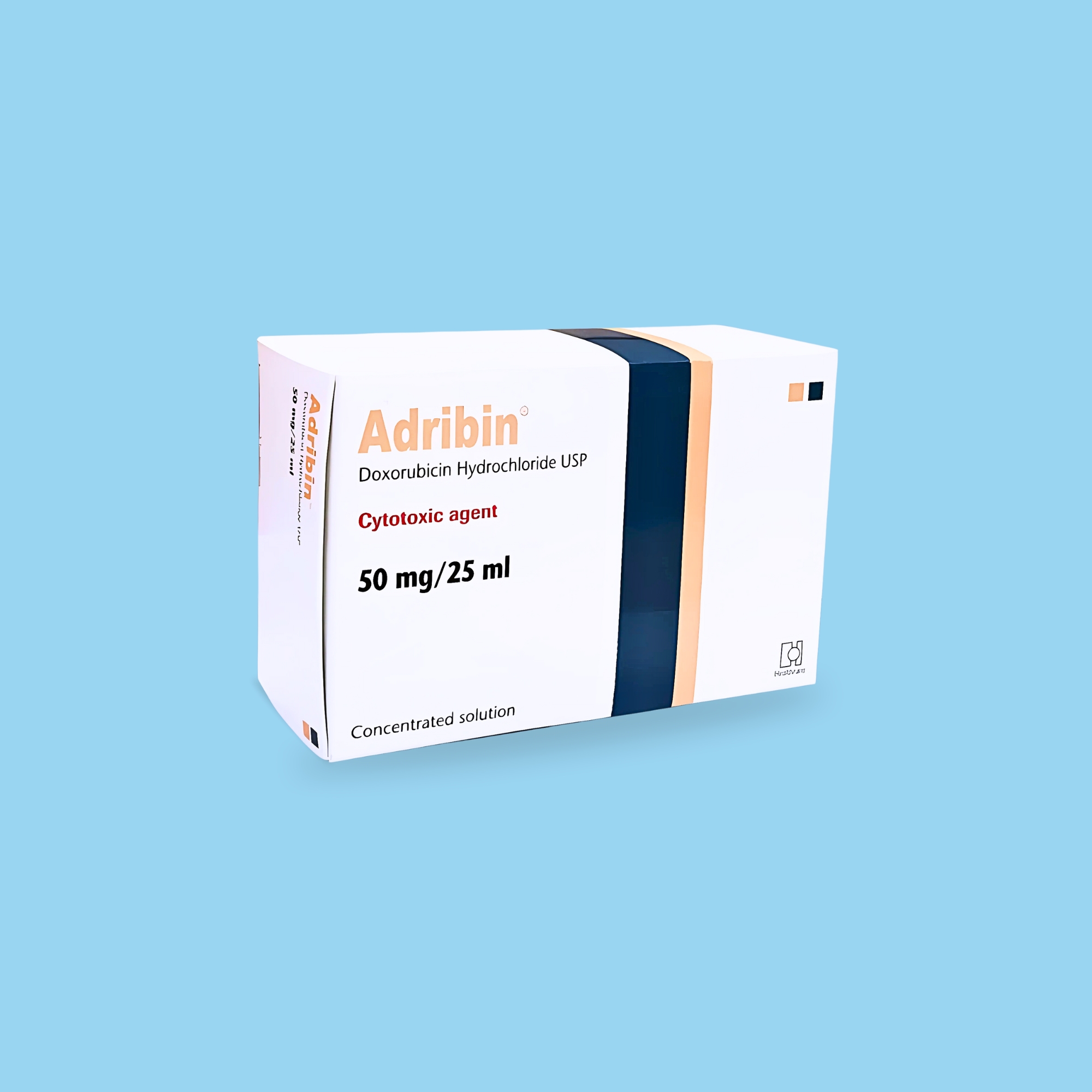
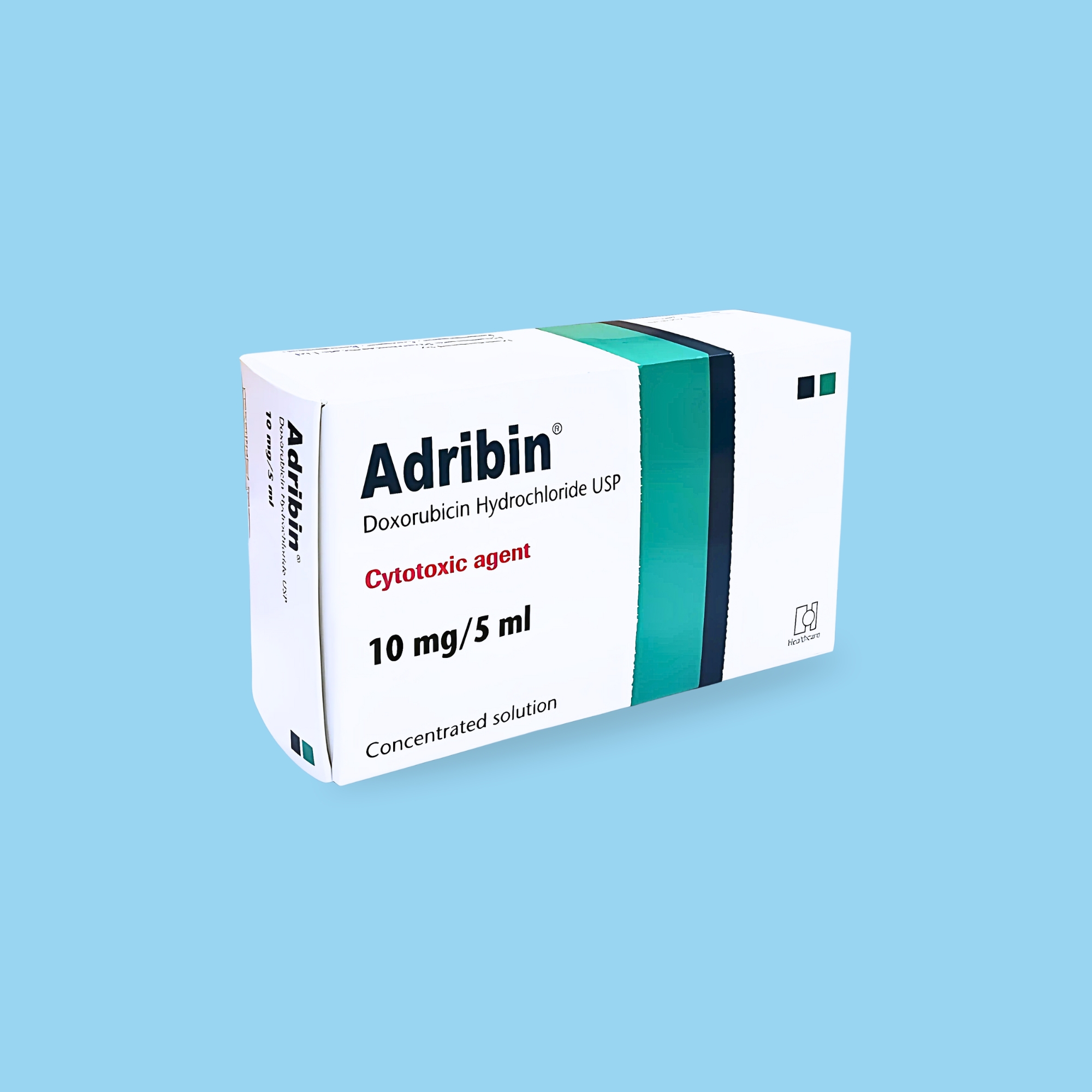
Adribin is indicated:
- As a
component of multiagent adjuvant chemotherapy for treatment of women with
axillary lymph node involvement following resection of primary breast
cancer.
- For
the treatment of acute lymphoblastic leukemia, acute myeloblastic
leukemia, Hodgkin lymphoma, Non-Hodgkin lymphoma, metastatic breast
cancer, metastatic Wilms' tumor, metastatic neuroblastoma, metastatic soft
tissue sarcoma, metastatic bone sarcomas, metastatic ovarian carcinoma,
metastatic transitional cell bladder carcinoma, metastatic thyroid
carcinoma, metastatic gastric carcinoma, metastatic bronchogenic
carcinoma.
Single
agent:
60 to 75 mg/m2 given intravenously every 21 days.
In combination therapy: 40 to 75 mg/m2 given intravenously every 21 to
28 days. Doxorubicin HCl should be discontinued in patients who develop signs
or symptoms of cardiomyopathy, and dose should be reduced in patients with
hepatic impairment. As an intravenous injection, Doxorubicin HCl is
administered through a central intravenous line or a secure and free-flowing
peripheral venous line containing 0.9% Sodium Chloride Injection, USP, 0.45%
Sodium Chloride Injection, USP, or 5% Dextrose Injection, USP over 3 to 10
minutes. The rate of Doxorubicin HCl administration should be decreased if
erythematous streaking along the vein proximal to the site of infusion or
facial flushing occur. As intravenous Infusion, Doxorubicin HCl is administered
only through a central catheter.
Doxorubicin HCl is contraindicated in patients with:
- Severe
myocardial insufficiency
- Recent
(occurring within the past 4-6 weeks) myocardial infarction
- Severe
persistent drug-induced myelosuppression
- Severe
hepatic impairment (defined as Child Pugh Class C or serum bilirubin level
greater than 5 mg/dl)
- Severe
hypersensitivity reaction to Doxorubicin HCl including anaphylaxis
The most common (>10%) adverse drug reactions are
alopecia, nausea and vomiting. Other adverse reactions include- cardiomyopathy
and arrhythmias, secondary malignancies, extravasation and tissue necrosis,
severe myelosuppression, tumor lysis syndrome, radiation sensitization and
radiation recall.
Pregnancy Category D. Doxorubicin HCl can cause fetal harm
when administered to a pregnant woman. If this drug is used during pregnancy,
or if the patient becomes pregnant while taking this drug, apprise the patient
of the potential hazard to a fetus. Female patients of reproductive potential
should be advised to use highly effective contraception during treatment with
Doxorubicin HCl and for 6 months after treatment. There is evidence of
Doxorubicinbe excreted in human milk. Because of the potential for serious
adverse reactions in nursing infants from Doxorubicin HCl, a decision should be
made whether to discontinue nursing or discontinue the drug, taking into
account the importance of the drug to the mother.
Caution
should be exercised in handling Adribin HCl solution. Procedures for proper
handling and disposal of anticancer drugs should be utilized. To minimize the
risk of dermal exposure, always wear impervious gloves when handling vials and
IV sets containing Adribin HCl. If Adribin HCl contacts the skin or mucosa,
immediately and thoroughly wash the skin with soap and water or sodium
bicarbonate solution and flush the mucosa with water.
The symptoms of overdose are likely to be an extension of
Adribin's pharmacological action. Single doses of 250 mg and 500 mg of Adribin
have proven to be fatal. Such doses may cause acute myocardial degeneration
within 24 hours and severe myelosuppression, the greatest effects of which are
seen between 10 and 15 days after administration. Delayed cardiac failure may
occur up to six months after the overdose. Patients should be observed
carefully and treatment should aim to support the patient during this period.
Store in a dry place at 2°-8° C temperature. Protect from
light and do not freeze. Keep out of the reach of children.