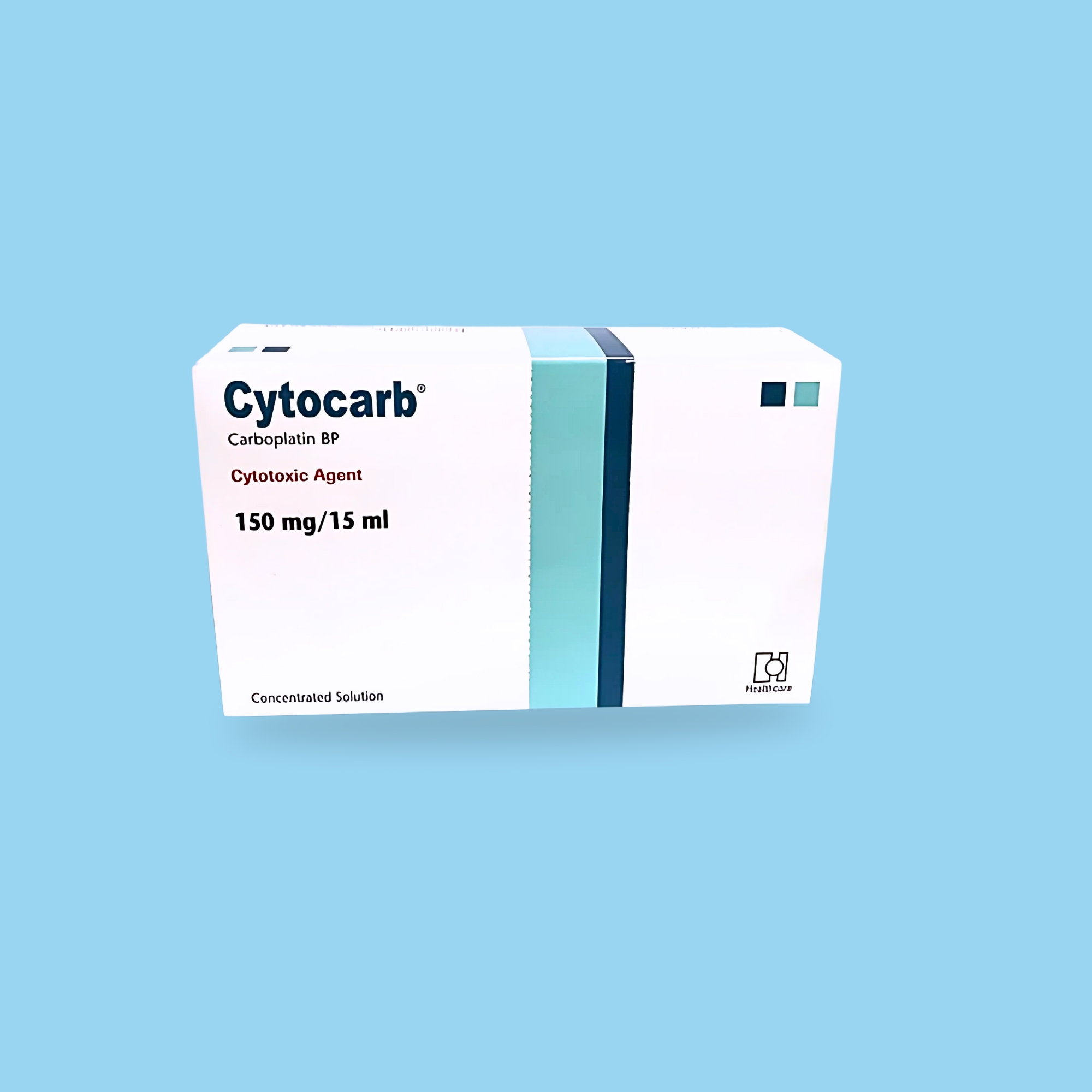
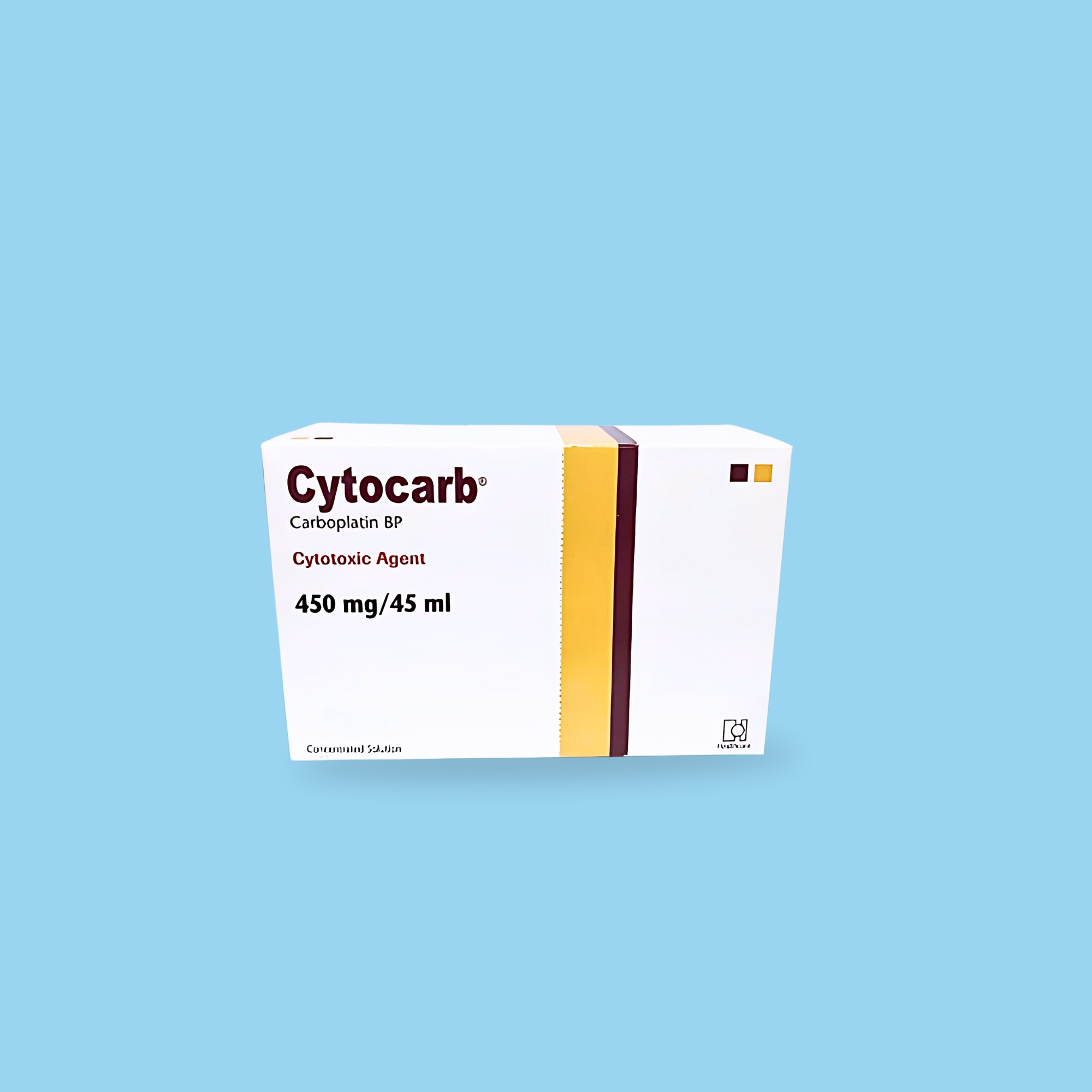
Carboplatin is indicated for the treatment of ovarian
carcinoma of epithelial origin, in patients with advanced disease previously
treated with cisplatin and in patients with relapsed disease after prior
chemotherapy.
Carboplatin may enhance the toxicity of other
myelosuppressive agents. Caution is advised when administered with nephrotoxic
or ototoxic drugs.
Carboplatin is administered by an infusion lasting 15
minutes or longer. No pre- or post-treatment hydration or forced diuresis is
required.
Patients with Impaired Kidney Function: Patients with
creatinine clearance values below 60 ml/min are at increased risk of severe
bone marrow suppression. In renally-impaired patients who received single-agent
carboplatin therapy, the incidence of severe leukopenia, neutropenia, or
thrombocytopenia has been about 25% when the dosage modifications listed below
have been used.
Creatinine Clearance 41–59 ml/min → 250 mg/m²
Creatinine Clearance 16–40 ml/min → 200 mg/m²
The data available for patients with severely impaired
kidney function (creatinine clearance below 15 ml/min) are too limited to
permit a recommendation for treatment. These dosing recommendations apply to
the initial course of treatment. Subsequent dosages should be adjusted
according to the patient’s tolerance based on the degree of bone marrow
suppression.
Formula Dosing (Calvert Formula): Total Dose (mg) = Target
AUC × (GFR + 25) With the Calvert formula, the total dose of carboplatin is
calculated in mg, not mg/m².
Target AUC of 4–6 mg/ml•min using single-agent carboplatin
provides the most appropriate dose range in previously treated patients.
This method allows compensation for variations in
pretreatment renal function that might otherwise result in underdosing or
overdosing.
Geriatric Dosing: Because renal function is often decreased
in elderly patients, formula dosing of carboplatin based on estimates of GFR
should be used to provide predictable plasma carboplatin AUCs and minimize the
risk of toxicity.
Preparation of Intravenous Solutions: Carboplatin Injection
is a premixed aqueous solution of 10 mg/ml carboplatin. It can be further
diluted to concentrations as low as 0.5 mg/ml with 5% Dextrose in Water (D5W)
or 0.9% Sodium Chloride Injection, USP. When prepared as directed, carboplatin
aqueous solutions are stable for 8 hours at room temperature (25°C). Since no
antibacterial preservative is contained in the formulation, it is recommended
that carboplatin aqueous solutions be discarded 8 hours after dilution.
Carboplatin is contraindicated in patients with severe bone
marrow suppression, severe bleeding, or hypersensitivity to carboplatin or
other platinum-containing compounds.
The most common adverse effects are bone marrow suppression
(thrombocytopenia, leukopenia, neutropenia), nausea, vomiting, anemia, and
electrolyte disturbances.
Observed Toxicity Rates in Previously Treated Patients:
AUC 4–5 → Thrombocytopenia 16%, Leukopenia 13%
AUC 6–7 → Thrombocytopenia 33%, Leukopenia 34%
Carboplatin can cause fetal harm when administered to a
pregnant woman. It is not known whether carboplatin is excreted in human milk.
Breastfeeding should be discontinued during treatment.
Monitor blood counts and renal function regularly.
Use formula dosing in patients with impaired renal function
and elderly patients.
Monitor for signs of myelosuppression and infection.
There is no known antidote for carboplatin overdose.
Expected complications include bone marrow suppression and renal and hepatic
impairment. Supportive care should be provided.
Store at a temperature not exceeding 25°C in a dry place.
Protect from light. Do not freeze.
Medicine: Keep out of reach of children.