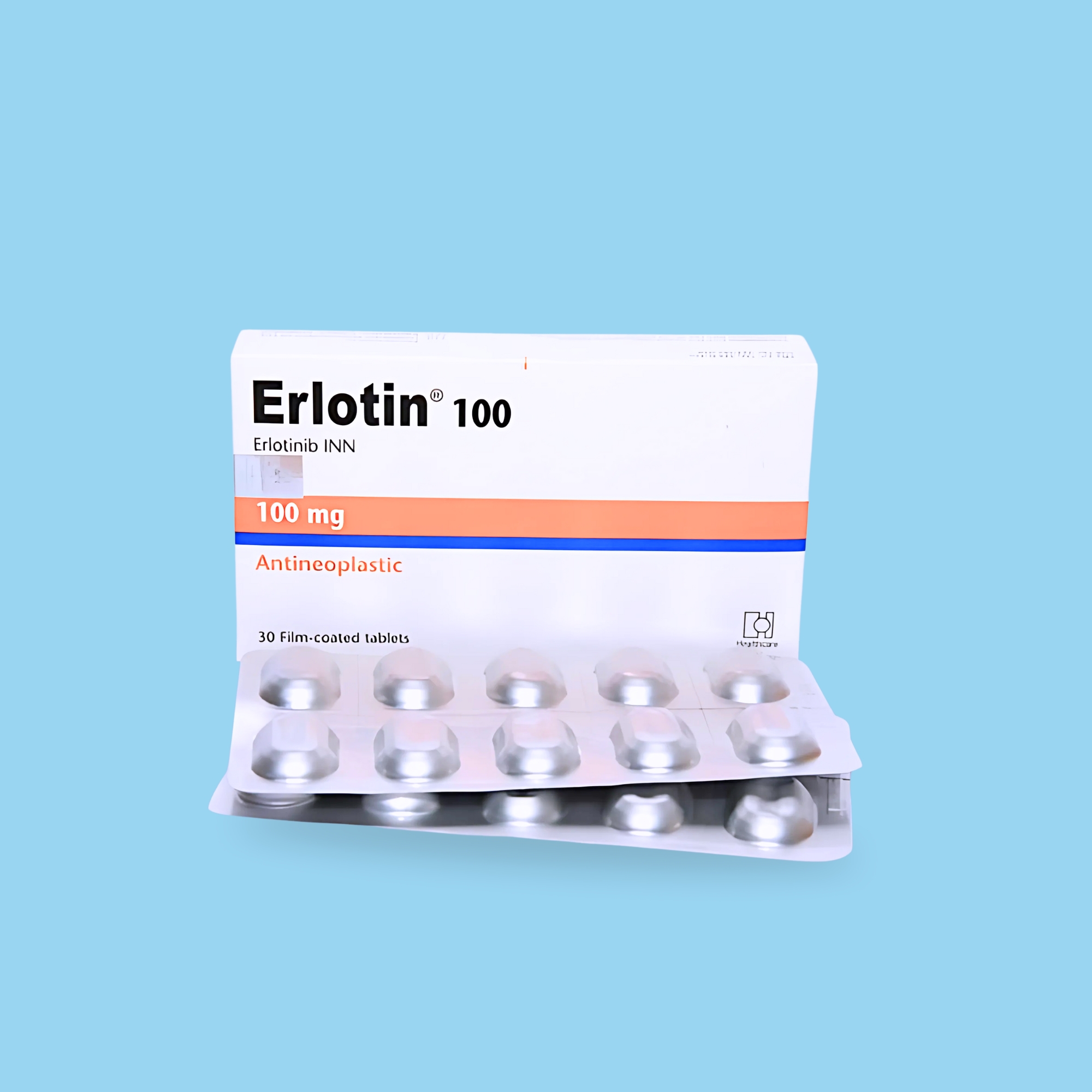
First-line treatment of patients with metastatic non-small
cell lung cancer (NSCLC) whose tumors have epidermal growth factor receptor
(EGFR) exon 19 deletions or exon 21 substitution mutations as detected.
Maintenance treatment of patients with locally advanced or
metastatic NSCLC whose disease has not progressed after four cycles of
platinum-based first-line chemotherapy.
Treatment of locally advanced or metastatic NSCLC after at
least one prior chemotherapy regimen.
First-line treatment of patients with locally advanced,
unresectable, or metastatic pancreatic cancer, in combination with gemcitabine.
Anticoagulants: Erlotinib may increase INR and bleeding risk
in patients taking warfarin.
CYP3A4 Inhibitors: Erlotinib is metabolized predominantly by
CYP3A4. Co-treatment with potent CYP3A4 inhibitors (e.g., ketoconazole, clarithromycin,
ritonavir, voriconazole, grapefruit juice) increases Erlotinib exposure.
CYP3A4 Inducers: Pre-treatment with CYP3A4 inducers (e.g.,
rifampicin, phenytoin, carbamazepine, phenobarbital, St. John’s Wort) decreases
Erlotinib exposure. Dose modifications are recommended.
Drugs Affecting Gastric pH: Co-administration with
omeprazole decreased Erlotinib AUC by 49%. Ranitidine 300 mg decreased AUC by
33%. Avoid concomitant use if possible.
NSCLC: The recommended daily dose of Erlotinib for NSCLC is
150 mg taken on an empty stomach, i.e., at least one hour before or two hours
after the ingestion of food. Treatment should continue until disease
progression or unacceptable toxicity occurs.
Pancreatic Cancer: The recommended daily dose of Erlotinib
for pancreatic cancer is 100 mg taken once daily in combination with gemcitabine.
Erlotinib should be taken on an empty stomach, i.e., at least one hour before
or two hours after food. Treatment should continue until disease progression or
unacceptable toxicity occurs.
Dose Modifications: Reduce Erlotinib by 50 mg decrements if
severe reactions occur. Increase Erlotinib by 50 mg increments as tolerated for
concomitant use with CYP3A4 inducers. Dose increases should be done at 2-week
intervals up to a maximum of 450 mg. For cigarette smokers, increase by 50 mg
increments at 2-week intervals to a maximum of 300 mg, then immediately reduce
the dose back to the recommended dose (150 mg or 100 mg) upon cessation of
smoking.
Adverse Reactions
The most common adverse reactions (≥20%) with Erlotinib were
rash, diarrhea, and fatigue. Other common adverse effects include dyspnea,
cough, nausea, and vomiting. Serious adverse reactions, which may include
fatalities, are: interstitial lung disease (ILD), renal failure, hepatotoxicity
with or without hepatic impairment, gastrointestinal perforation, bullous and
exfoliative skin disorders, myocardial infarction, cerebrovascular accident,
microangiopathic hemolytic anemia with thrombocytopenia, and hemorrhage in
patients taking warfarin.
Pregnancy: Pregnancy Category D. Erlotinib can cause fetal
harm when administered to a pregnant woman.
Nursing Mothers: It is not known whether Erlotinib is
excreted in human milk. Because of potential adverse reactions in nursing
infants, a decision should be made whether to discontinue nursing or
discontinue Erlotinib, considering the importance of the drug to the mother.
Pediatric Use: Safety and effectiveness in pediatric
patients have not been established.
Geriatric Use: No overall differences in safety or efficacy
were observed between subjects ≥65 years and younger patients.
Interstitial Lung Disease (ILD): Occurs in 1.1% of patients.
Withhold Erlotinib for acute onset of new or progressive unexplained pulmonary
symptoms such as dyspnea, cough, and fever. Discontinue if ILD is confirmed.
Renal Failure: Monitor renal function and electrolytes,
particularly in patients at risk of dehydration. Withhold Erlotinib for several
toxicities.
Hepatotoxicity: Hepatotoxicity with or without hepatic
impairment including hepatic failure and hepatorenal syndrome may occur.
Monitor periodic liver tests. Withhold or discontinue Erlotinib for severe or
worsening abnormalities.
Gastrointestinal Perforations: Discontinue Erlotinib.
Skin Disorders: Bullous and exfoliative skin disorders may
occur; discontinue Erlotinib.
Cardiovascular Risk: Myocardial infarction and ischemic
cerebrovascular accident have been reported. The risk of MI is increased in
patients with pancreatic cancer.
Warfarin Use: Use with coumarin-derived anticoagulants may
lead to increased INR and bleeding reactions. Monitor closely.
Single oral doses of Erlotinib up to 1,000 mg in healthy
subjects and weekly doses up to 1,600 mg in cancer patients have been
tolerated. Repeated twice-daily doses of 200 mg were poorly tolerated after a
few days. Severe adverse reactions such as diarrhea, rash, and hepatic
elevation may occur above the recommended dose. In case of suspected overdose,
Erlotinib should be withheld and symptomatic treatment instituted.
Store at temperature not exceeding 30°C in a dry place.
Protect from light and moisture.