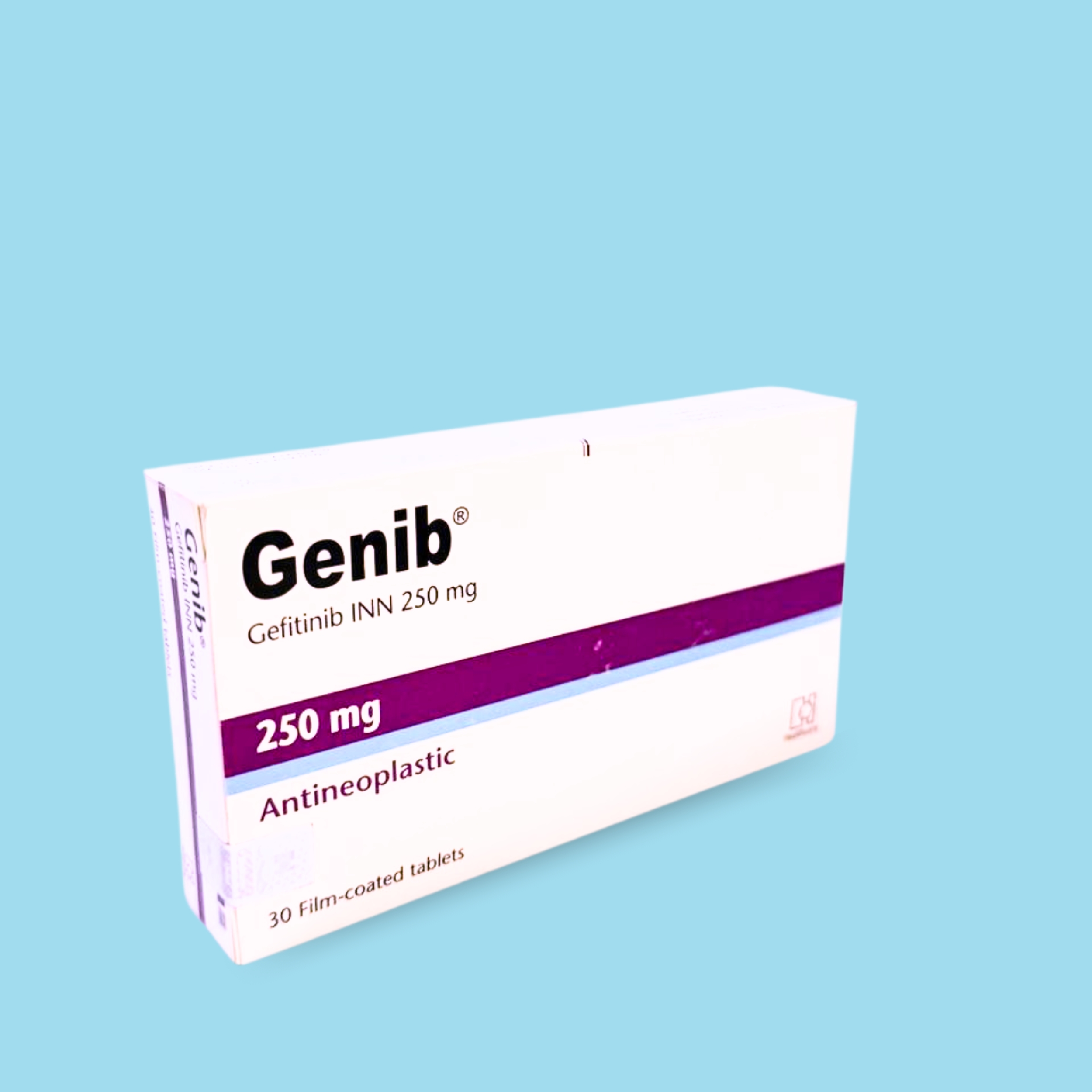
Gefitinib is indicated as monotherapy for the treatment of
patients with locally advanced or metastatic non-small cell lung cancer after
failure of both platinum-based and docetaxel chemotherapies. The effectiveness
of Gefitinib is based on objective response rates.
Gefitinib
is metabolized by CYP3A4. Strong inducers (e.g., rifampicin, phenytoin,
carbamazepine, St. John’s wort) may decrease plasma levels of Gefitinib, while
strong inhibitors (e.g., ketoconazole, itraconazole) may increase exposure.
Dose adjustment may be required.
The recommended daily dose of Gefitinib is 250 mg orally,
with or without food. Higher doses do not improve response but increase toxicity.
Dosage Modifications: Withhold treatment for up to 14 days
following adverse effects such as:
Acute onset or worsening pulmonary symptoms (dyspnea, cough,
fever)
≥ Grade 2 ALT and/or AST elevations
≥ Grade 3 diarrhea
Severe or worsening ocular disorders including keratitis
≥ Grade 3 skin reactions
Treatment may be resumed when adverse effects resolve or
improve to Grade 1. Permanently discontinue for confirmed interstitial lung
disease, severe hepatic impairment, gastrointestinal perforation, or persistent
ulcerative keratitis.
Co-administration with CYP3A4 Inducers: In the absence of
severe adverse reactions, increase dose to 500 mg daily. Resume 250 mg daily
after discontinuation of the strong CYP3A4 inducer.
Gefitinib is contraindicated in patients with severe
hypersensitivity to Gefitinib or to any of its components.
The most common adverse events reported at the recommended
250 mg daily dose are diarrhea, rash, acne, dry skin, nausea, and vomiting. The
500 mg dose showed a higher frequency of these adverse events.
Pregnancy: Category D. Gefitinib may cause fetal harm when
administered to a pregnant woman. Animal studies have shown placental transfer.
There are no adequate and well-controlled studies in pregnant women. If used
during pregnancy, patients should be apprised of the potential hazard to the
fetus.
Lactation: It is not known whether Gefitinib is excreted in
human milk. Use in nursing mothers is not recommended.
Pulmonary Toxicity: Cases of interstitial lung disease (ILD)
have been observed in about 1% of patients. Patients may present with dyspnea,
cough, and fever, which can become severe and require hospitalization.
Hepatotoxicity: Asymptomatic increases in liver
transaminases have been reported. Periodic liver function tests (ALT, AST,
bilirubin, alkaline phosphatase) are recommended. Discontinue Gefitinib if
changes are severe.
Information for Patients: Patients should seek medical
advice promptly if they develop severe or persistent diarrhea, nausea,
anorexia, vomiting, pulmonary symptoms, eye irritation, or any new symptom.
Gefitinib has shown low acute toxicity up to 500 mg in
clinical studies. At higher doses (up to 1000 mg/day), adverse events such as
diarrhea and rash occur more frequently and severely. Overdose should be
managed symptomatically, with special attention to severe diarrhea.
Store at temperatures not exceeding 30°C, in a dry place,
protected from light and moisture. Keep out of the reach of children.