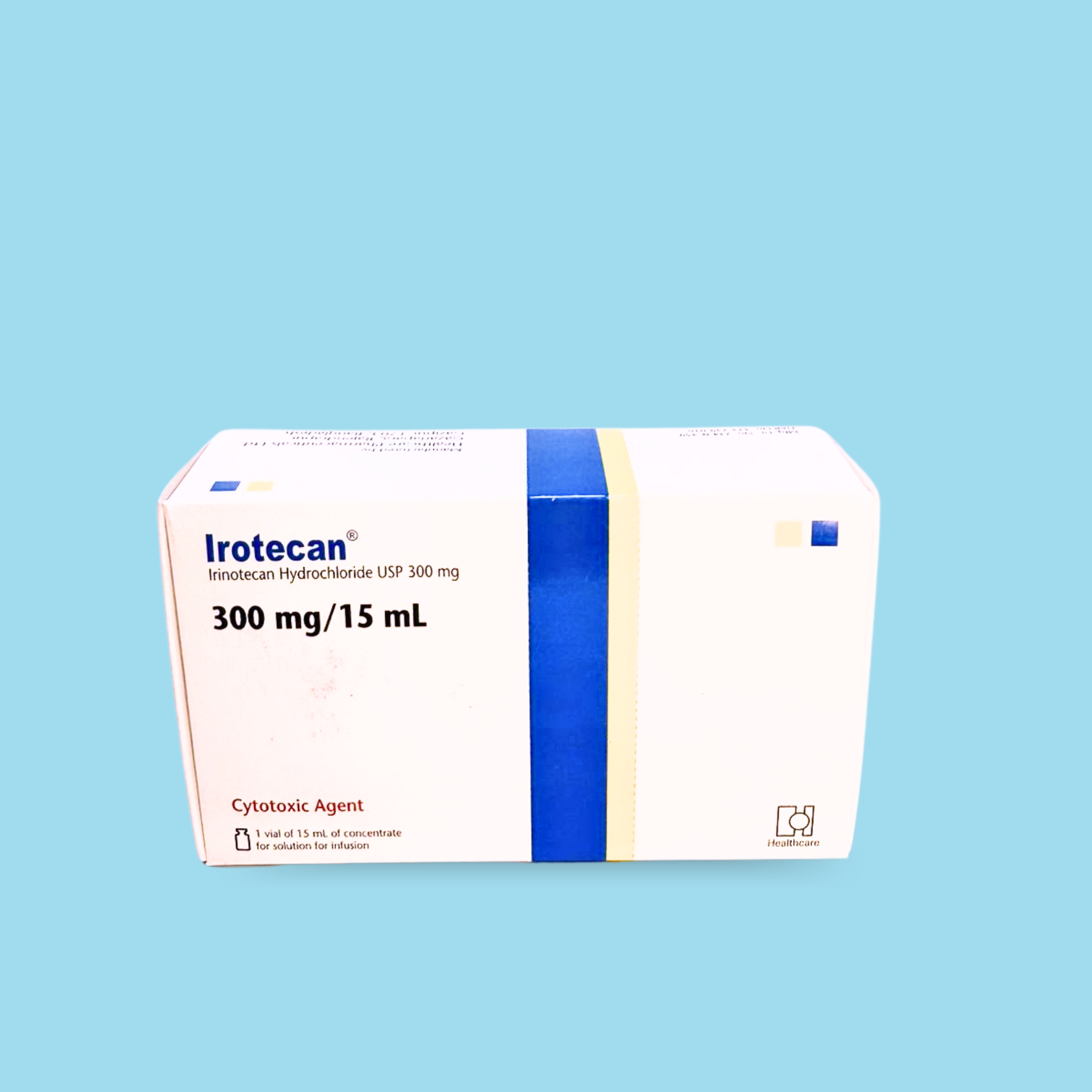
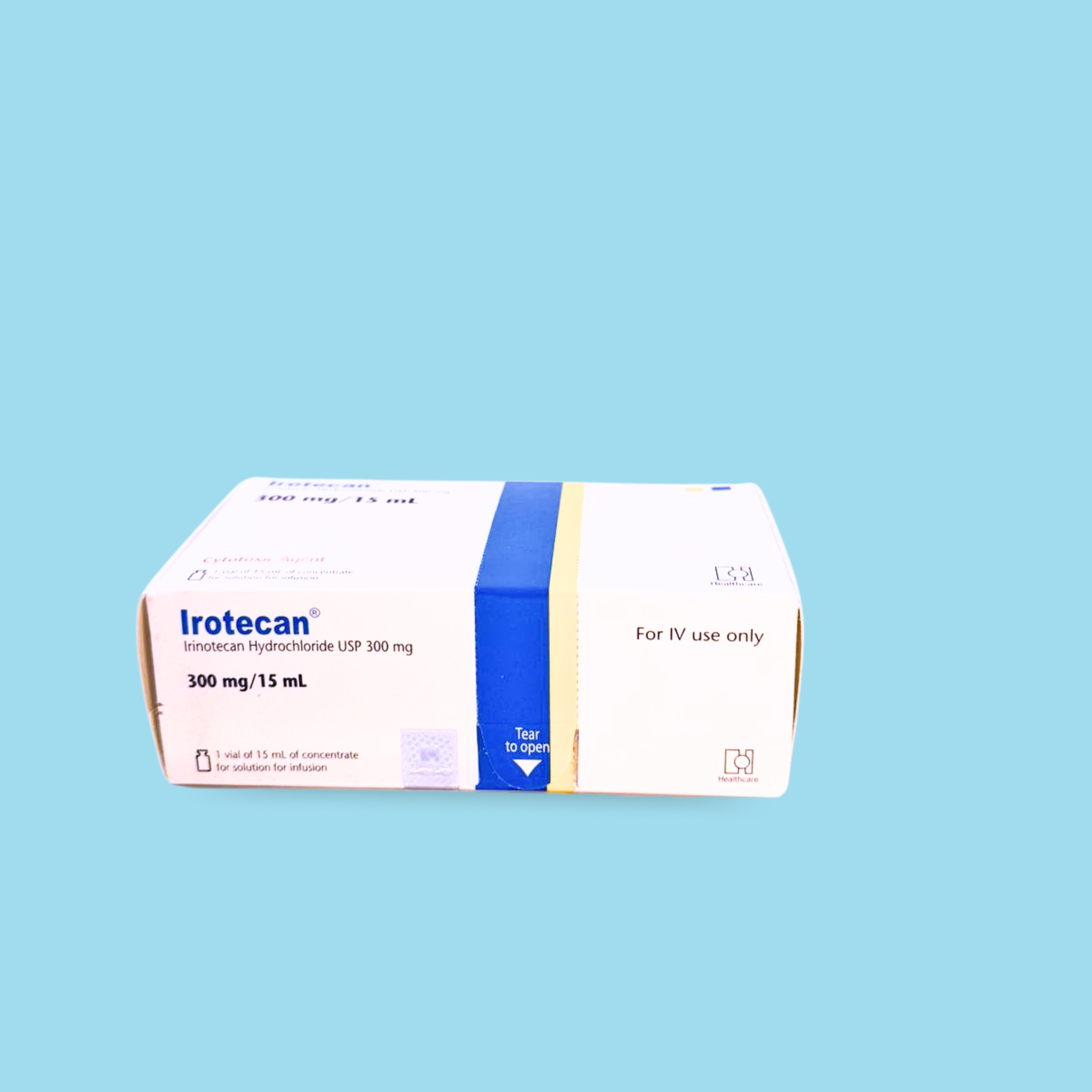
Irinotecan Injection is indicated as a component of
first-line therapy in combination with 5-Fluorouracil (5-FU) and Leucovorin
(LV) for patients with metastatic carcinoma of the colon or rectum. It is also
indicated for patients with metastatic carcinoma of the colon or rectum whose
disease has recurred or progressed following initial Fluorouracil-based
therapy.
Diuretics increase risks of dehydration secondary to
vomiting/diarrhea. Prophylactic dexamethasone as an antiemetic may enhance
lymphocytopenia. Prochlorperazine may increase incidence of akathisia. Other
antineoplastic agents may enhance myelosuppression and diarrhea. St John’s Wort
and ketoconazole may reduce irinotecan exposure.
Colorectal cancer combination regimen 1:
Irinotecan 125 mg/m² intravenous infusion over 90 minutes on
days 1, 8, 15, 22 with LV 20 mg/m² intravenous bolus infusion on days 1, 8, 15,
22, followed by 5-FU intravenous bolus infusion on days 1, 8, 15, 22 every 6
weeks.
Colorectal cancer combination regimen 2:
Irinotecan 180 mg/m² intravenous infusion over 90 minutes on
days 1, 15, 29 with LV 200 mg/m² intravenous infusion over 2 hours on days 1,
2, 15, 16, 29, 30, followed by 5-FU 400 mg/m² intravenous bolus infusion on
days 1, 2, 15, 16, 29, 30 and 5-FU 600 mg/m² intravenous infusion over 22 hours
on days 1, 2, 15, 16, 29, 30.
Colorectal cancer single agent regimen 1:
Irinotecan 125 mg/m² intravenous infusion over 90 minutes on
days 1, 8, 15, 22, then 2-week rest.
Colorectal cancer single agent regimen 2:
Irinotecan 350 mg/m² intravenous infusion over 90 minutes on
day 1 every 3 weeks.
Irinotecan Injection is contraindicated in patients with a
known hypersensitivity to the drug or its excipients.
Common adverse reactions (>30%) observed in combination
therapy clinical studies are: nausea, vomiting, abdominal pain, diarrhea,
constipation, anorexia, mucositis, neutropenia, leukopenia (including
lymphocytopenia), anemia, thrombocytopenia, asthenia, pain, fever, infection,
abnormal bilirubin, and alopecia.
Pregnancy: Category D. Irinotecan can cause fetal harm when
administered to a pregnant woman.
Lactation: Radioactivity appeared in rat milk within 5
minutes of intravenous administration of radiolabeled Irinotecan and was
concentrated up to 65-fold at 4 hours after administration relative to plasma
concentrations. It is not known whether this drug is excreted in human milk.
Diarrhea and Cholinergic Reactions: Early diarrhea
(occurring during or shortly after infusion of Irinotecan) is usually transient
and infrequently severe. It may be accompanied by cholinergic symptoms such as
rhinitis, increased salivation, miosis, lacrimation, diaphoresis, flushing, and
intestinal hyperperistalsis that can cause abdominal cramping. Bradycardia may
also occur. These symptoms may be prevented or treated with 0.25–1 mg of
intravenous or subcutaneous atropine (unless contraindicated). Late diarrhea
(occurring more than 24 hours after administration) can be life-threatening,
leading to dehydration, electrolyte imbalance, or sepsis.
Myelosuppression: Deaths due to sepsis following severe
neutropenia have been reported. Neutropenic fever occurred in 3% of patients;
6% required G-CSF. Manage febrile neutropenia promptly with antibiotics.
Patients with Reduced UGT1A1 Activity: Individuals
homozygous for the UGT1A1*28 allele (UGT1A1 7/7 genotype) are at increased risk
for neutropenia.
Overdosage with Irinotecan may result in severe diarrhea and
bone marrow suppression. There is no known antidote. Supportive care should be
provided.
Store at controlled room temperature 15°–30°C. Protect from
light. Keep the vial in the carton until the time of use.