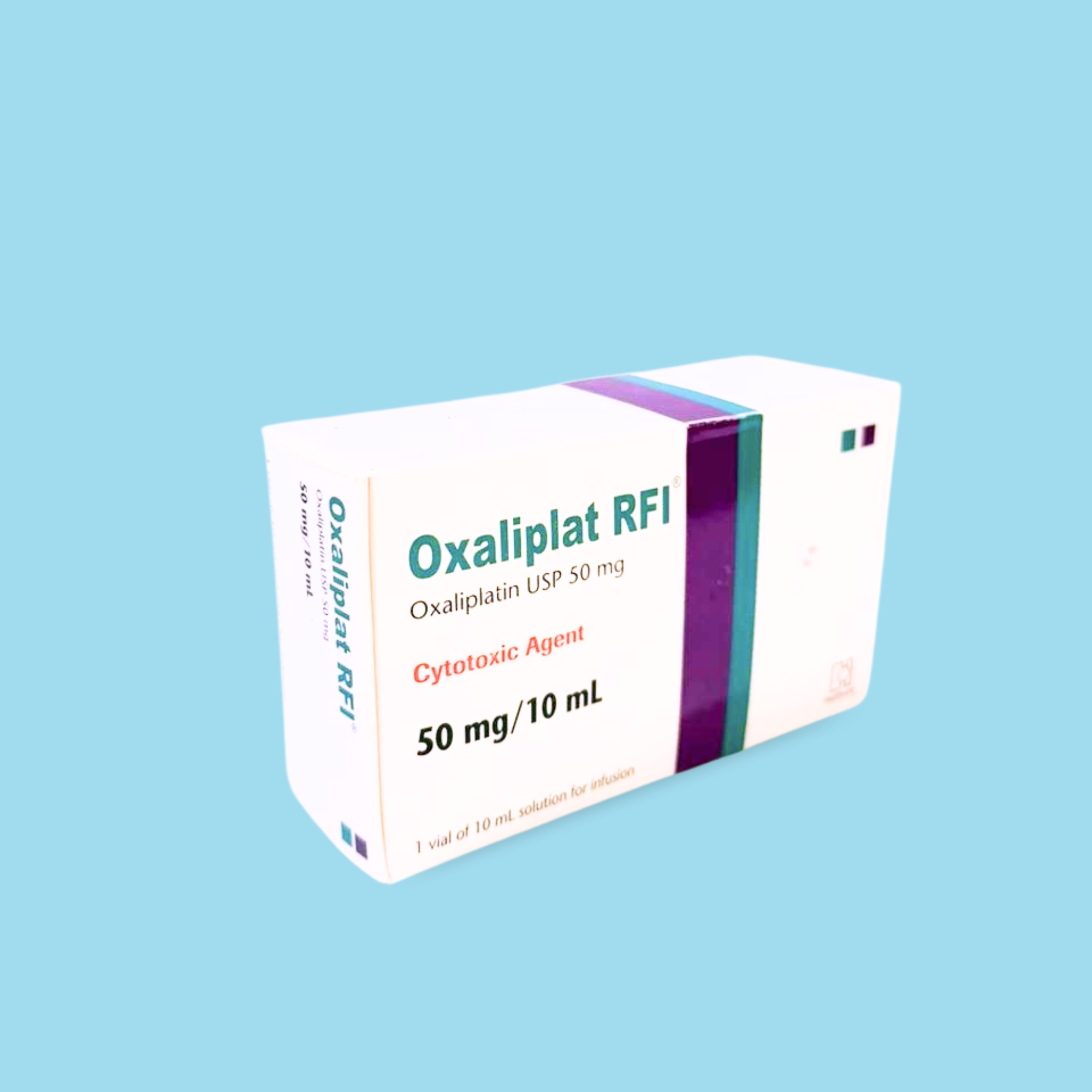
Oxaliplatin is a platinum-based drug used in combination
with infusional 5-fluorouracil/leucovorin, which is indicated for the adjuvant
treatment of stage III colon cancer in patients who have undergone complete
resection of the primary tumor. It is also indicated for the treatment of
advanced colorectal cancer.
No specific cytochrome P-450 based drug interaction studies
have been conducted. No pharmacokinetic interaction between 85 mg/m²
Oxaliplatin and 5-fluorouracil/leucovorin has been observed in patients treated
every 2 weeks. Increases of 5-fluorouracil plasma concentrations by
approximately 20% have been observed with doses of 130 mg/m² Oxaliplatin every
3 weeks. Because platinum-containing species are eliminated primarily through
the kidney, clearance of these products may be decreased by coadministration of
potentially nephrotoxic compounds, although this has not been specifically
studied.
Oxaliplatin should be administered in combination with
5-fluorouracil/leucovorin every 2 weeks. On Day 1: Oxaliplatin 85 mg/m² is
given as an intravenous infusion in 250–500 ml 5% Dextrose Injection, USP, and
leucovorin 200 mg/m² intravenous infusion in 5% Dextrose Injection, USP, both
administered over 120 minutes at the same time in separate bags using a Y-line.
This is followed by 5-fluorouracil 400 mg/m² intravenous bolus given over 2–4
minutes, followed by 5-fluorouracil 600 mg/m² intravenous infusion in 500 ml 5%
Dextrose Injection, USP as a 22-hour continuous infusion. On Day 2: Leucovorin
200 mg/m² intravenous infusion is administered over 120 minutes, followed by
5-fluorouracil 400 mg/m² IV bolus given over 2–4 minutes, followed by
5-fluorouracil 600 mg/m² intravenous infusion in 500 ml 5% Dextrose Injection,
USP as a 22-hour continuous infusion. The dose of Oxaliplatin should be reduced
to 75 mg/m² (adjuvant setting) or 65 mg/m² (advanced colorectal cancer) if
there are persistent grade 2 neurosensory events that do not resolve, after
recovery from grade 3/4 gastrointestinal toxicities (despite prophylactic
treatment), or after grade 4 neutropenia or grade 3/4 thrombocytopenia. The
next dose should be delayed until neutrophils are ≥1.5 × 10⁹/L and platelets
are ≥75 × 10⁹/L.
Oxaliplatin is contraindicated in patients with a known
allergy to Oxaliplatin or other platinum compounds.
The most common adverse reactions (incidence ≥ 40%) were
peripheral sensory neuropathy, neutropenia, thrombocytopenia, anemia, nausea,
increase in transaminases and alkaline phosphatase, diarrhea, emesis, fatigue
and stomatitis. Other adverse reactions, including serious adverse reactions,
have also been reported.
Pregnancy: Oxaliplatin is classified as Pregnancy Category
D. Fetal harm can occur when administered to a pregnant woman. Women should be
apprised of the potential harm to the fetus.
Nursing Mothers: It is not known whether Oxaliplatin or its
derivatives are excreted in human milk. Because many drugs are excreted in
human milk and because of the potential for serious adverse reactions in
nursing infants from Oxaliplatin, a decision should be made whether to
discontinue nursing or discontinue the drug, taking into account the importance
of the drug to the mother.
Allergic reactions: Monitor patients for the development of
rash, urticaria, erythema, pruritus, bronchospasm, and hypotension.
Neuropathy: Reduce the dose or discontinue Oxaliplatin if
necessary.
Pulmonary Toxicity: Treatment may need to be discontinued
until interstitial lung disease or pulmonary fibrosis are excluded.
Hepatotoxicity: Monitor liver function tests.
Pregnancy: Fetal harm can occur when administered to a
pregnant woman. Women should be advised of the potential harm to the fetus.
There is no known antidote for Oxaliplatin overdose. In
addition to thrombocytopenia, the anticipated complications of an Oxaliplatin
overdose include hypersensitivity reaction, myelosuppression, nausea, vomiting,
diarrhea, and neurotoxicity. Several cases of overdoses have been reported with
Oxaliplatin. Adverse reactions observed included Grade 4 thrombocytopenia
(<25,000/mm³) without any bleeding, anemia, sensory neuropathy such as
paresthesia, dysesthesia, laryngospasm and facial muscle spasms,
gastrointestinal disorders such as nausea, vomiting, stomatitis, flatulence,
abdominal enlargement, Grade 4 intestinal obstruction, Grade 4 dehydration,
dyspnea, wheezing, chest pain, respiratory failure, severe bradycardia, and
death. Patients suspected of receiving an overdose should be monitored, and
supportive treatment should be administered.
Store at a temperature not exceeding 25 ºC in a dry place.
Protect from light and moisture.
Medicine: Keep out of reach of children.