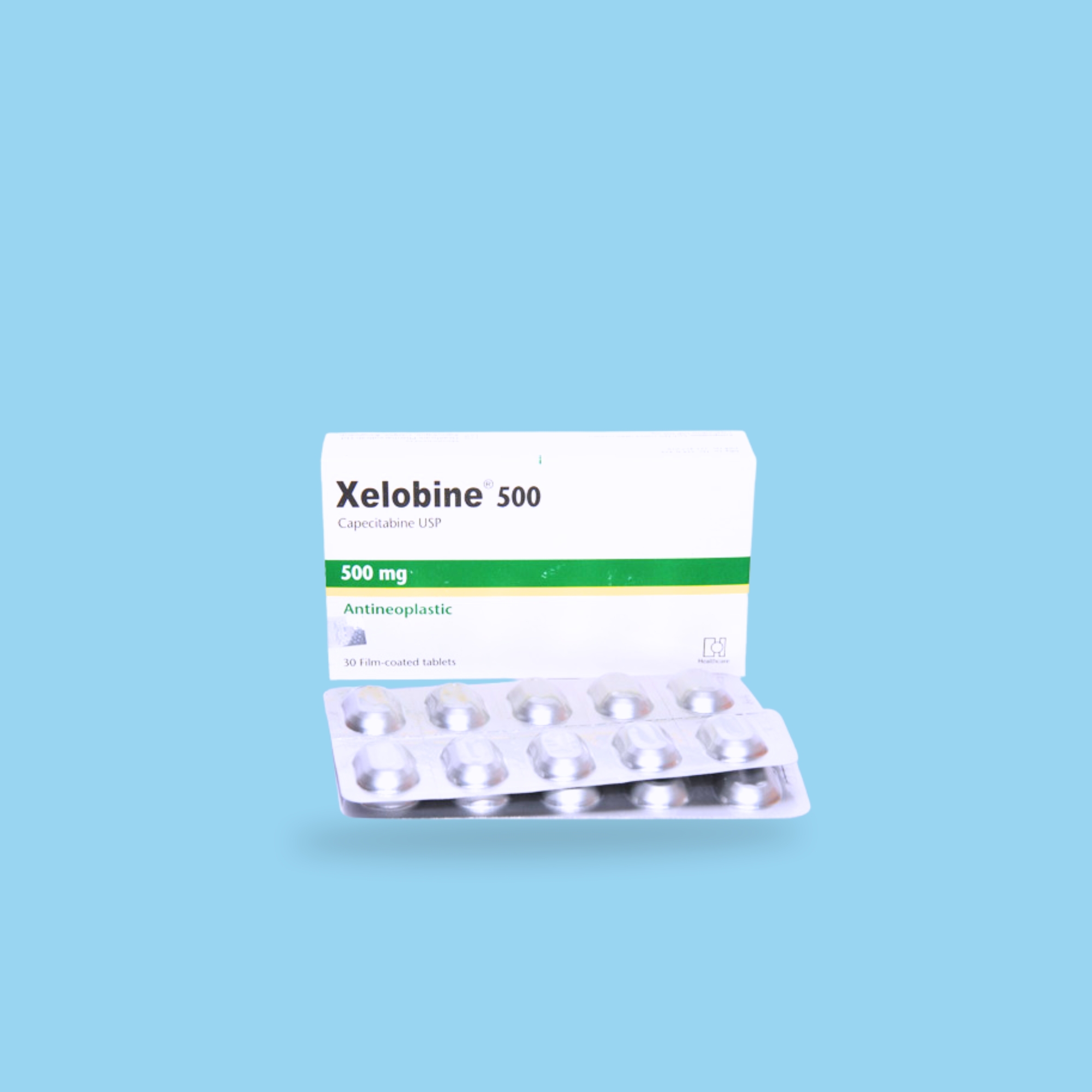
Adjuvant Colon Cancer
- Patients with Dukes' C colon cancer
Metastatic Colorectal Cancer
-First-line as monotherapy when treatment with fluoropyrimidine therapy alone is preferred
Metastatic Breast Cancer
-In combination with docetaxel after failure of prior anthracycline containing therapy
-As monotherapy in patients resistant to both paclitaxel and an anthracycline-containing regimen
Xelobine® (Capecitabine) can interact with certain medicines, which may increase the risk of side effects or change how the drug works. One important interaction is with blood thinners such as warfarin or coumarin derivatives, as capecitabine may increase their effect and raise the risk of bleeding. It can also interact with phenytoin, potentially raising phenytoin levels in the blood. Use with leucovorin may enhance both the effectiveness and the side effects of capecitabine. In addition, drugs that affect liver enzymes or kidney function may change how capecitabine is processed in the body. Patients should always inform their doctor about all medicines, supplements, or herbal products they are taking before starting Xelobine®, to avoid harmful interactions.
Monotherapy (Metastatic Colorectal Cancer, Adjuvant Colorectal Cancer, Metastatic Breast Cancer):
The recommended dose of Capecitabine is 1250 mg/m? administered orally twice daily (morning and evening; equivalent to 2500 mg/m total daily dose) for 2 weeks followed by a 1-week rest period given as 3-week cycles.
Adjuvant treatment in patients with Dukes' C colon cancer is recommended for a total of 6 months ie, Capecitabine 1250 mg/m2 orally twice daily for 2-weeks followed by a 1-week rest period, given as 3-weeks cycles for a total of 8 cycles (24 weeks)
In Combination With Docetaxel (Metastatic Breast Cancer):
In combination with docetaxel, the recommended dose of Capecitabine is 1250 mg/m? twice daily for 2 weeks followed by a 1-week rest period, combined with docetaxel at 75 mg/m? as a 1-hour intravenous infusion every 3 weeks.
Capecitabine is contraindicated in patients with known hypersensitivity to Capecitabine or to any components of its and severe renal impairment.
Xelobine® (Capecitabine) may cause side effects, although not everyone experiences them. The most common side effects include diarrhea, nausea, vomiting, abdominal pain, loss of appetite, fatigue, hand–foot syndrome (redness, swelling, or peeling of the palms and soles), and mouth sores. Some patients may also experience low blood cell counts, which can increase the risk of infections, anemia, or bleeding. Less common but more serious side effects can involve the heart (such as chest pain or irregular heartbeat), liver problems, severe diarrhea leading to dehydration, and severe skin reactions. Neurological symptoms like dizziness, headache, or confusion may also occur. Because of these risks, regular monitoring is important, and patients should promptly inform their doctor if they experience severe or persistent side effects.
Pregnancy: Pregnancy Category D.
Can cause fetal harm. Advise women of the potential risk to the fetus.
Nursing Mothers: Discontinue nursing when receiving Capecitabine treatment.
Geriatric: Greater incidence of adverse reactions. Monitoring required.
Coagulopathy: May result in bleeding, death. Monitor anticoagulant response (e.g., INR) and adjust anticoagulant dose accordingly.
Diarrhea: May be severe. Interrupt Capecitabine treatment immediately until diarrhea resolves or decreases to grade 1.
Recommend standard antidiarrheal treatments.
Cardiotoxicity: Common in patients with a prior history of coronary artery disease.
Dehydration and Renal Failure: Interrupt Capecitabine treatment until dehydration is corrected. Potential risk of acute renal failure secondary to dehydration. Monitor and correct dehydration.
Mucocutaneous' and _ Dermatologic Toxicity: Severe mucocutaneous reactions, Steven-Johnson Syndrome (SJS) and Toxic Epidermal Necrolysis (TEN), have been reported.
Hyperbilirubinemia: Interrupt Capecitabine treatment immediately until the hyperbilirubinemia resolves or decreases in intensity.
Hematologic: Do not treat patients with neutrophil counts <1.5 x 10⁹/L or thrombocyte counts <100 x 109/L. If grade 3-4 neutropenia or thrombocytopenia occurs, stop therapy until condition resolves.
The manifestations of acute overdose would include nausea, vomiting, diarrhea, gastrointestinal irritation and bleeding, and bone marrow depression. Medical management of overdose should include customary supportive medical interventions aimed at correcting the presenting clinical manifestations. Although no clinical experience using dialysis as a treatment for Capecitabine overdose has been reported, dialysis may be of benefit in reducing circulating concentrations of 5'-DFUR, a low molecular-weight metabolite of the parent compound. Single doses of Capecitabine were not lethal to mice, rats, and monkeys at doses up to 2000 mg/kg.
Store at temperature not exceeding 30°C in a dry place. Protect from light and moisture.
Medicine: Keep out of reach of children