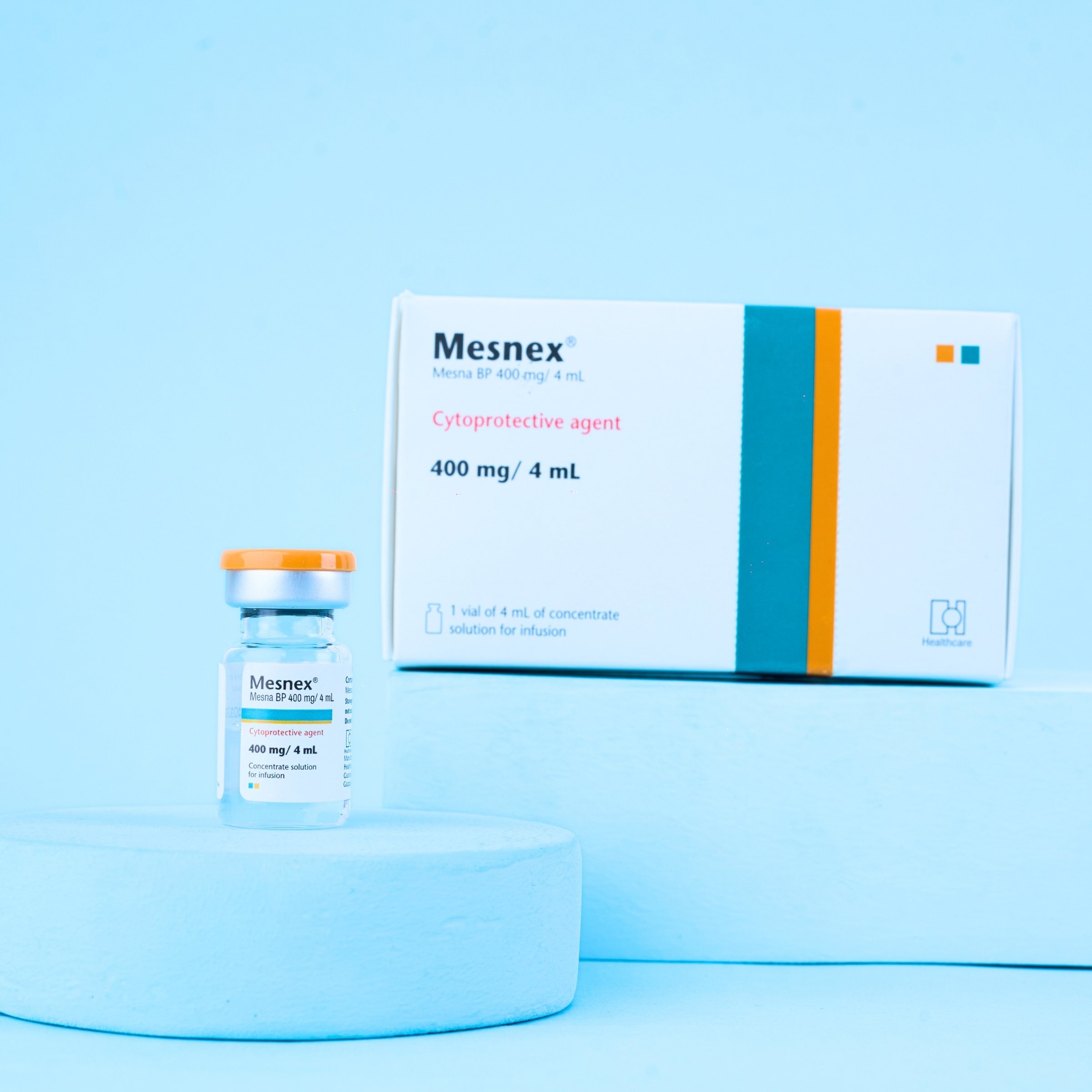
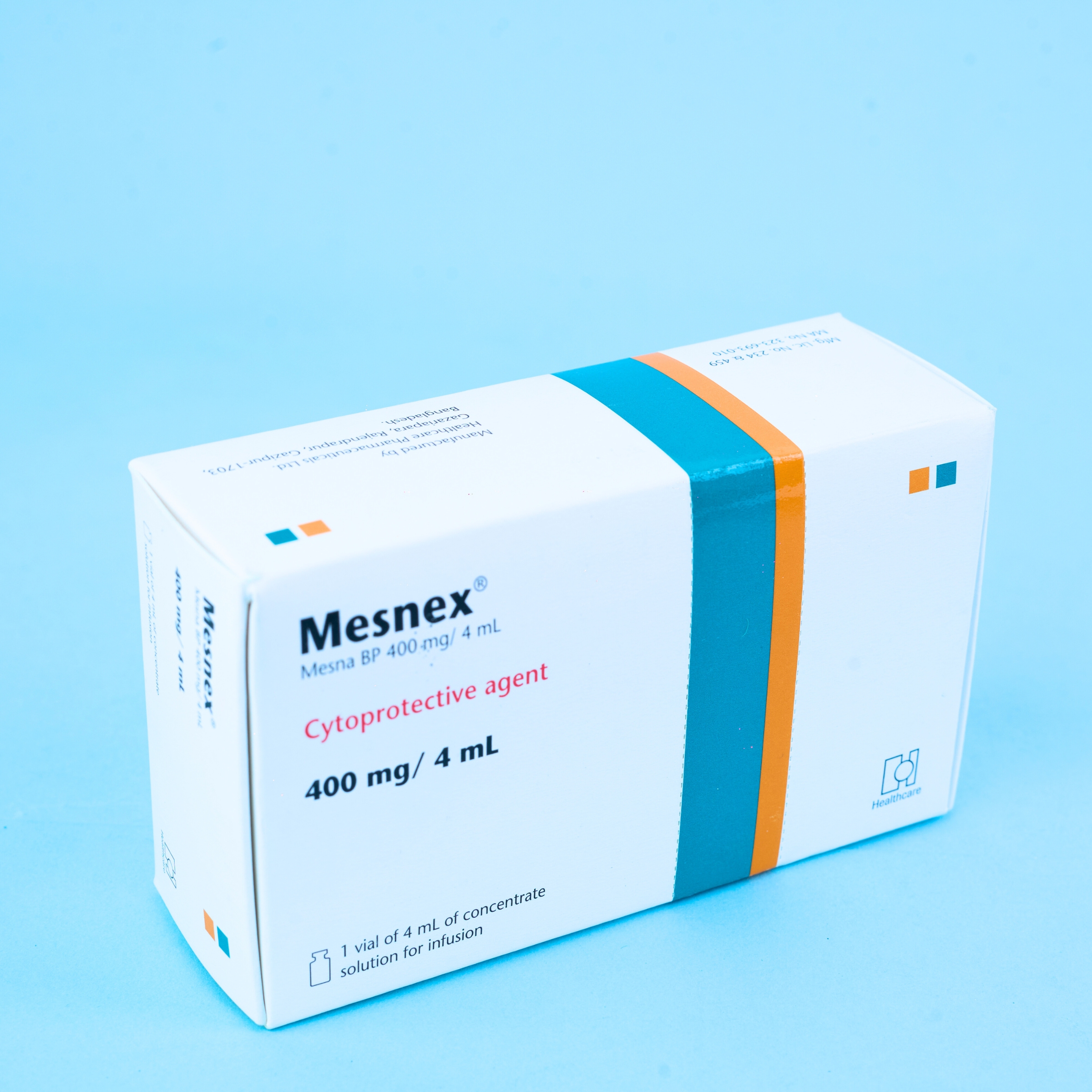
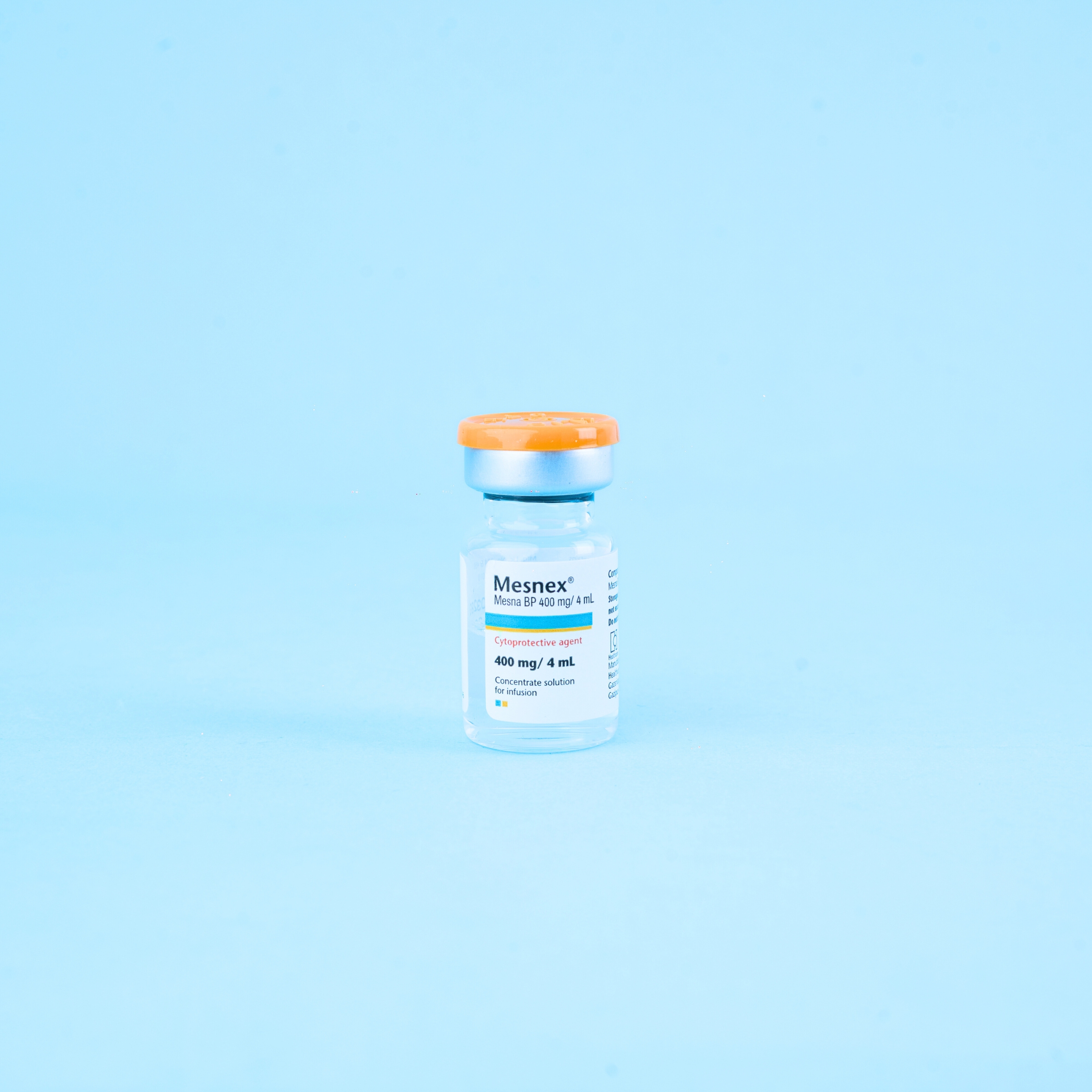
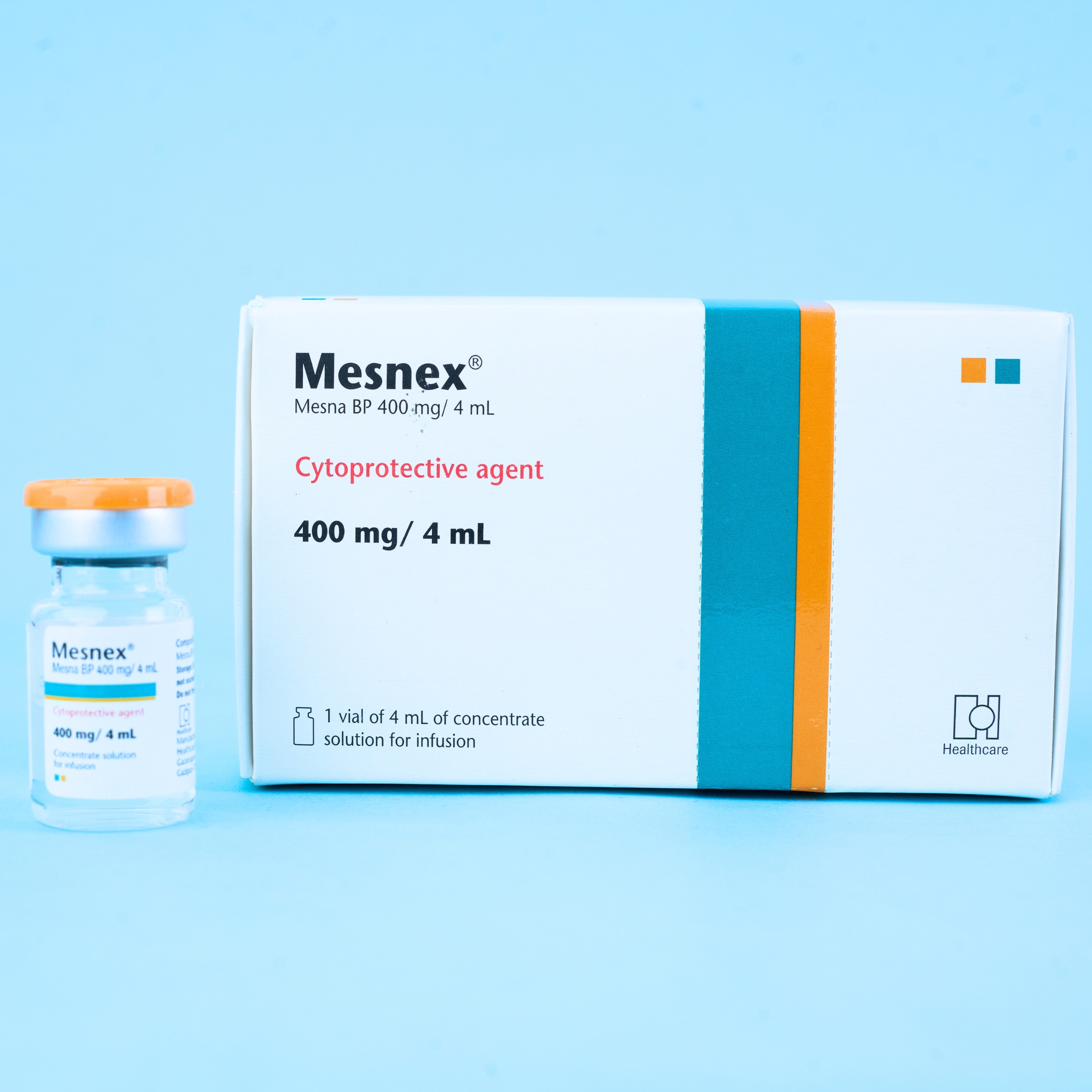
Mesnex is indicated as a prophylactic agent in preventing
ifosfamide-induced hemorrhagic cystitis (syndrome of bleeding and irritation of
the bladder). It is also indicated in preventing high dose cyclophospamide-induced
hemorrhagic cystitis.
No clinical drug interaction studies have been conducted
with Mesnex.
For the prophylaxis of ifosfamide induced hemorrhagic
cystitis, Mesna may be given on a fractionated dosing schedule of three bolus
intravenous injections or a single bolus injection followed by IV
administration of mesna as outlined below.
Intravenous schedule: Mesna is given as intravenous bolus
injection in a dosage equal to 20% of the ifosfamide dosage (w/w) at the time
of ifosfamide administration and 4 and 8 hours after each dose of Ifosfamide.
The total daily dose of Mesna is 60% of the ifosfamide dose.
Intravenous Dosing: Mesna Injection is given as intravenous
bolus injections in a dosage equal to 20% of the Ifosfamide dosage (w/w) at the
time of Ifosfamide administration.
Preparation of Intravenous Solutions/Stability: For IV
administration the drug can be diluted by adding the Mesna Injection solution
to any of the following fluids obtaining final concentrations of 20 mg
Mesna/ml: 5% Dextrose Injection, 5% Dextrose and 0.2% Sodium Chloride
Injection, 5% Dextrose and 0.33% Sodium Chloride Injection, 5% Dextrose and
0.45% Sodium Chloride Injection, 0.92% Sodium Chloride Injection, Lactated
Ringer’s Injection.
It is contraindicated in patients with known
hypersensitivity to Mesna or to any of the excipients of this product.
The common side effects are colic, depression, diarrhea,
fatigue, headache, hypotension, irritability, joint pains, limb pains, nausea,
rash, tachycardia, vomiting.
Pregancy Category B. There are no adequate and
well-controlled studies in pregnant women. It is not known whether this drug is
excreted in human milk. Because many drugs are excreted in human milk and
because of the potential for serious adverse reactions in nursing infants from
Mesna, a decision should be made whether to discontinue nursing or to
discontinue the drug, taking into account the importance of the drug to the
mother.
Allergic reactions to Mesnex ranging from mild
hypersensitivity to systemic anaphylactic reactions have been reported.
Patients with automimmune disorders who were treated with cyclophosphamide and
Mesnex appeared to have a higher incidence of allergic reactions. The majority
of these patients received Mesnex orally. Mesnex has been developed as an agent
to reduce the risk of ifosfamide induced hemorrhagic cystitis. It will not
prevent or alleviate any of the other adverse reactions or toxicities
associated with ifosfamide therapy. Mesnex does not prevent hemorrhagic
cystitis in all patients. Up to 6% of patients treated with Mesnex have
developed hematuria (>50 RBC/hpf or Who grade 2 and above). As a result, a
morning specimen of urine should be examined for the presence of hematuria
(microscopic evidence of red blood cells) each day prior to lfasfamide therapy.
If hematuria develops when Mesnex is given with Ifosamide according to the
recommended dosage schedule, depending on the severity of the hematuria, dosage
reductions or discontinuation of Ifosfamide therapy may be initiated. In order
to reduce the risk of hematuria, Mesnex must be administered with each dose of
Ifosfamide as outlined in the DOSAGE AND ADMINISTRATION section. Mesnex is not
effective in reducing the risk of hematuria due to other pathological
conditions such as thrombocytopenia. Because of the benzyl alcohol content, the
multidose vial should not be used in neonates or infants and should be used
with caution in older pediatric patients.
There is no known antidote for Mesnex. Oral doses of 6.1 and
4.3 g/kg were lethal to mice and rats, respectively. These doses are
approximately 15 and 22 times the maximum recommended human dose on a body
surface area basis. Death was preceded by diarrhea, tremor, convulsions,
dyspnea, and cyanosis.
Store in the original carton at 20°-25°C. Protect from
light. Keep out of the reach of children.