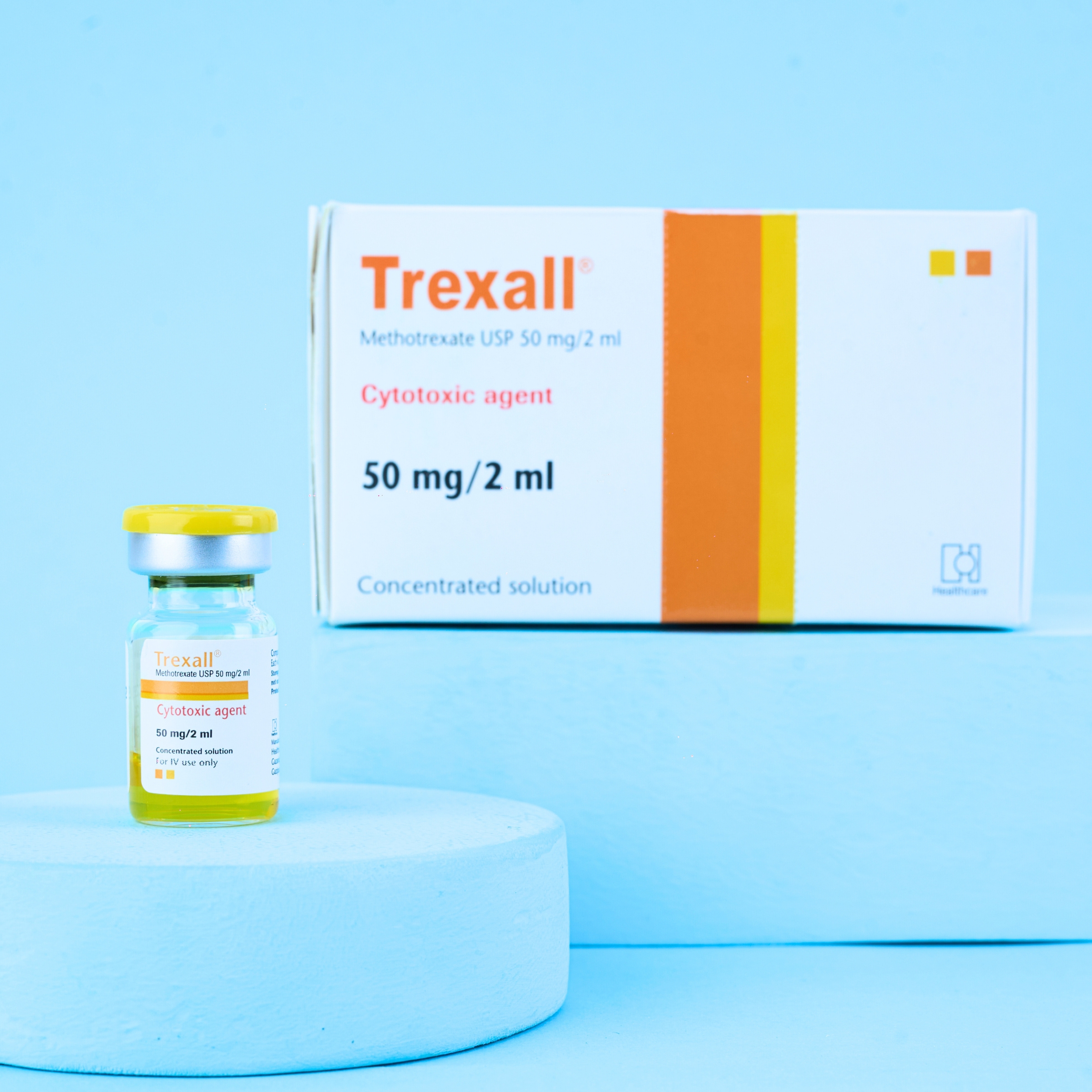
i) Neoplastic Diseases
- Treatment of gestational choriocarcinoma, chorioadenoma
destruens and hydatidiform mole
- In acute lymphoblastic leukemia
- Used in combination with other chemotherapeutic agents in
the treatment of advanced stage non-Hodgkin’s lymphomas
- Treatment of breast cancer, epidermoid cancers of the head
and neck, advanced mycosis fungoides (cutaneous T-cell lymphoma) and lung
cancer, particularly squamous cell and small cell types
ii) Rheumatoid Arthritis including Polyarticular-Course
Juvenile Rheumatoid Arthritis
- Indicated in the management of selected adults with
severe, active rheumatoid arthritis, or children with active
polyarticular-course juvenile rheumatoid arthritis, who have had an
insufficient therapeutic response to, or are intolerant of, an adequate trial
of first-line therapy including full dose non-steroidal anti-inflammatory
agents (NSAIDs)
iii) Psoriasis
- Indicated in the symptomatic control of severe,
recalcitrant, disabling psoriasis that is not adequately responsive to other
forms of therapy
NSAIDs: Should not be administered prior to or concomitantly
with high doses of Trexall, such as used in the treatment of osteosarcoma
Salicylates, Phenylbutazone, Phenytoin and Sulfonamides:
Toxicity may be increased Penicillin, Theophylline, Probenecid, Azathioprine,
Retinoids,
Sulfasalazine: Should be closely monitored for possible
increased risk of hepatotoxicity
Cisplatin: Caution must be exercised if high-dose Trexall is
administered in combination
Mercaptopurine: Trexall increases the plasma levels of
mercaptopurine
Tetracycline, Chloramphenicol and Nonabsorbable Broad
Spectrum Antibiotics: May decrease intestinal absorption of Trexall
Vitamin preparations containing folic acid or its
derivatives: Decreases responses to systemically administered Trexall
Trimethoprim/Sulfamethoxazole: Rarely increases bone marrow
suppression
Contraindications
Alcoholism, alcoholic liver disease or other chronic liver
disease
Immunodeficiency syndromes
Pre-existing blood dyscrasias, such as bone marrow
hypoplasia, leukopenia, thrombocytopenia, or significant anemia
Hypersensitivity to methotrexate
Pregnant women with psoriasis or rheumatoid arthritis
Women of childbearing potential
Nursing mothers
Pregnancy should be avoided if either partner is receiving
methotrexate; during and for a minimum of three months after therapy for male
patients, and during and for at least one ovulatory cycle after therapy for
female patients
Neoplastic Diseases-
Choriocarcinoma and similar trophoblastic diseases: Orally
or intramuscularly in doses of 15 to 30 mg daily for a five-day course. The
courses are usually repeated for 3 to 5 times as required, with rest periods of
one or more weeks interposed between courses, until any manifesting toxic
symptoms subside. Since hydatidiform mole may precede choriocarcinoma,
prophylactic chemotherapy with methotrexate has been recommended. Chorioadenoma
destruens is considered to be an invasive form of hydatidiform mole.
Methotrexate is administered in these disease states in doses similar to those
recommended for choriocarcinoma
Acute Lymphoblastic Leukemia
Induction dose: 3.3 mg/m2 in combination with prednisone 60
mg/m2 daily for 4 to 6 weeks
Maintenance dose: Orally or IM administration 2 times a week
in total weekly doses of 30 mg/m2
Alternate maintenance dose: 2.5 mg/kg IV every 14 days. If
and when relapse does occur, reinduction of remission can again usually be
obtained by repeating the initial induction regimen
Lymphoma
Burkitt's tumor Stages I to II: 10 to 25 mg once a day for 4
to 8 days
Burkitt's tumor Stage III: Methotrexate is commonly given
concomitantly with other antitumor agents
Duration of therapy: All stages usually require several
courses of therapy interposed with 7 to 10 day rest periods
Lymphosarcoma Stage III: 0.625 to 2.5 mg/kg daily as a part
of combination chemotherapy
Mycosis Fungoides: Early stage dosing: 5 to 50 mg once a
week; alternatively, 15 to 37.5 mg 2 times a week may be used in patients who
have responded poorly to weekly therapy
Breast Cancer: 40 mg/m 2 intravenously on the 1 st and 8 th
day every 4 weeks in combination with cyclophosphamide and fluoracil for 6-12
cycles
Head and Neck Cancer: 40 mg/m2 IV weekly until disease
progression or unacceptable toxicity (3 weeks equals one cycle; goal is to
complete at least six cycles).
Adult Rheumatoid Arthritis: Single doses of 7.5 mg once per
week, Maximum dose: 20 mg/week in adults
Polyarticular-Course Juvenile Rheumatoid Arthritis: 10 mg/m2
once weekly
Psoriasis: Single dose: 10 to 25 mg once per
week, maximum dose: 30 mg/week
The most frequently reported adverse reactions include
ulcerative stomatitis, leukopenia, nausea and abdominal distress
Other frequently reported adverse effects are malaise, undue
fatigue, chills and fever, dizziness and decreased resistance to infection
Trexall has been reported to cause impairment of fertility,
oligospermia and menstrual dysfunction in humans, during and for a short period
after cessation of therapy
US FDA Pregnancy Category X. Methotrexate should be used in
the treatment of neoplastic diseases only when the potential benefit outweighs
the risk to the fetus. It is contraindicated in nursing mothers.
Trexall formulations and diluents containing preservatives
must not be used for intrathecal or high dose Trexall therapy
It is necessary to follow patients on Trexall closely for
toxic effects
If adverse reactions occur, the drug should be reduced in
dosage or discontinued and appropriate corrective measures should be taken. If
necessary, this could include the use of leucovorin calcium
If Trexall therapy is reinstituted, it should be carried out
with caution, with adequate consideration of further need for the drug and
increased alertness as to possible recurrence of toxicity
Persistent liver function test abnormalities, &/or
depression of serum albumin may be indicators of serious liver toxicity &
require evaluation
Folate deficiency: May increase Trexall toxicity
Use in Special Populations
Pediatric patients: Benefits should be weighed against the
potential risk before using Trexall alone or in combination with other drugs,
especially in pediatric patients or young adults.
Geriatric patients: Elderly patients should be closely
monitored for early signs of hepatic, bone marrow and renal toxicity.
Leucovorin is indicated to diminish the toxicity and
counteract the effect of inadvertently administered overdosages of Trexall and
its administration should begin as promptly as possible.
Store at a temperature not exceeding 30°C in a dry place.
Protect from light & moisture.