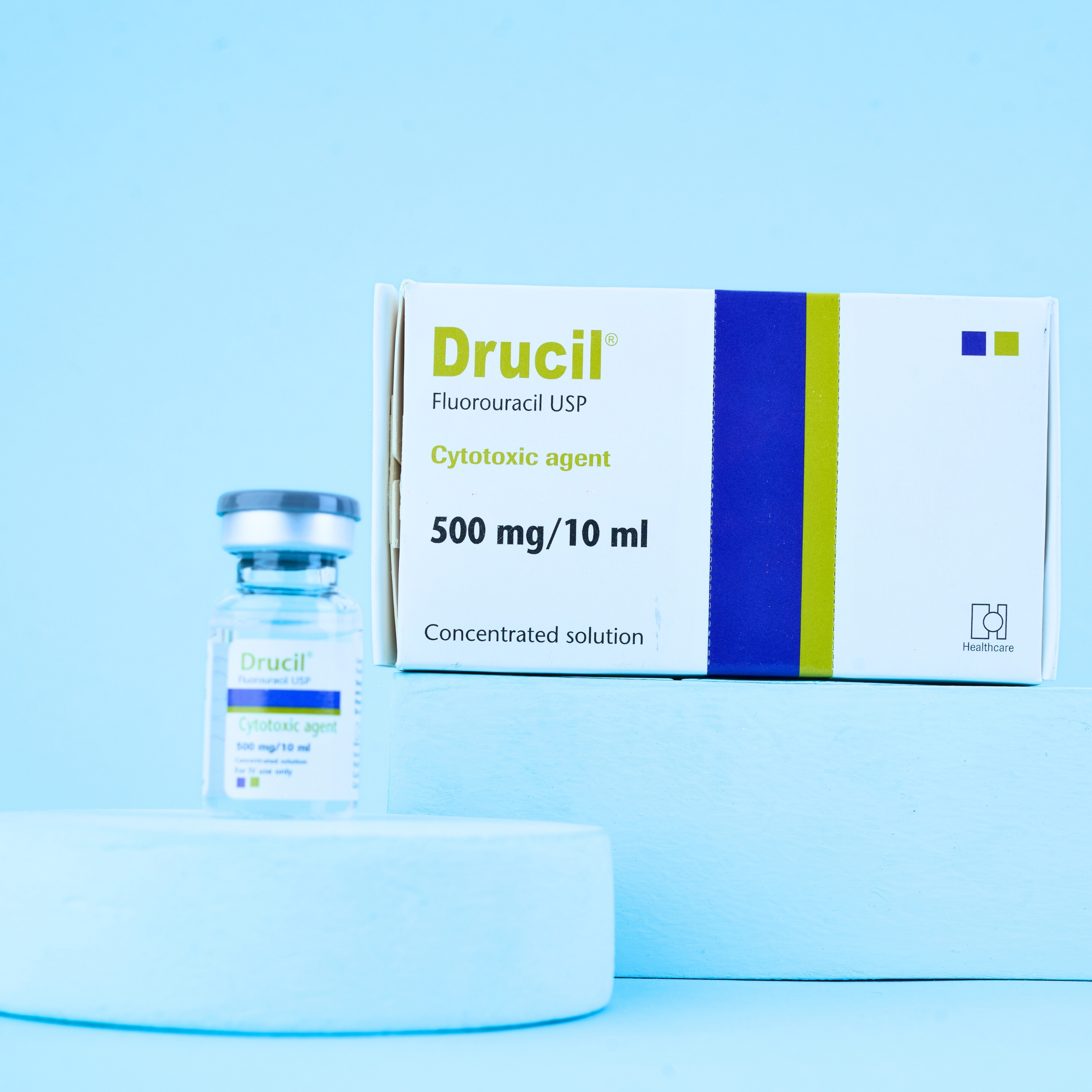
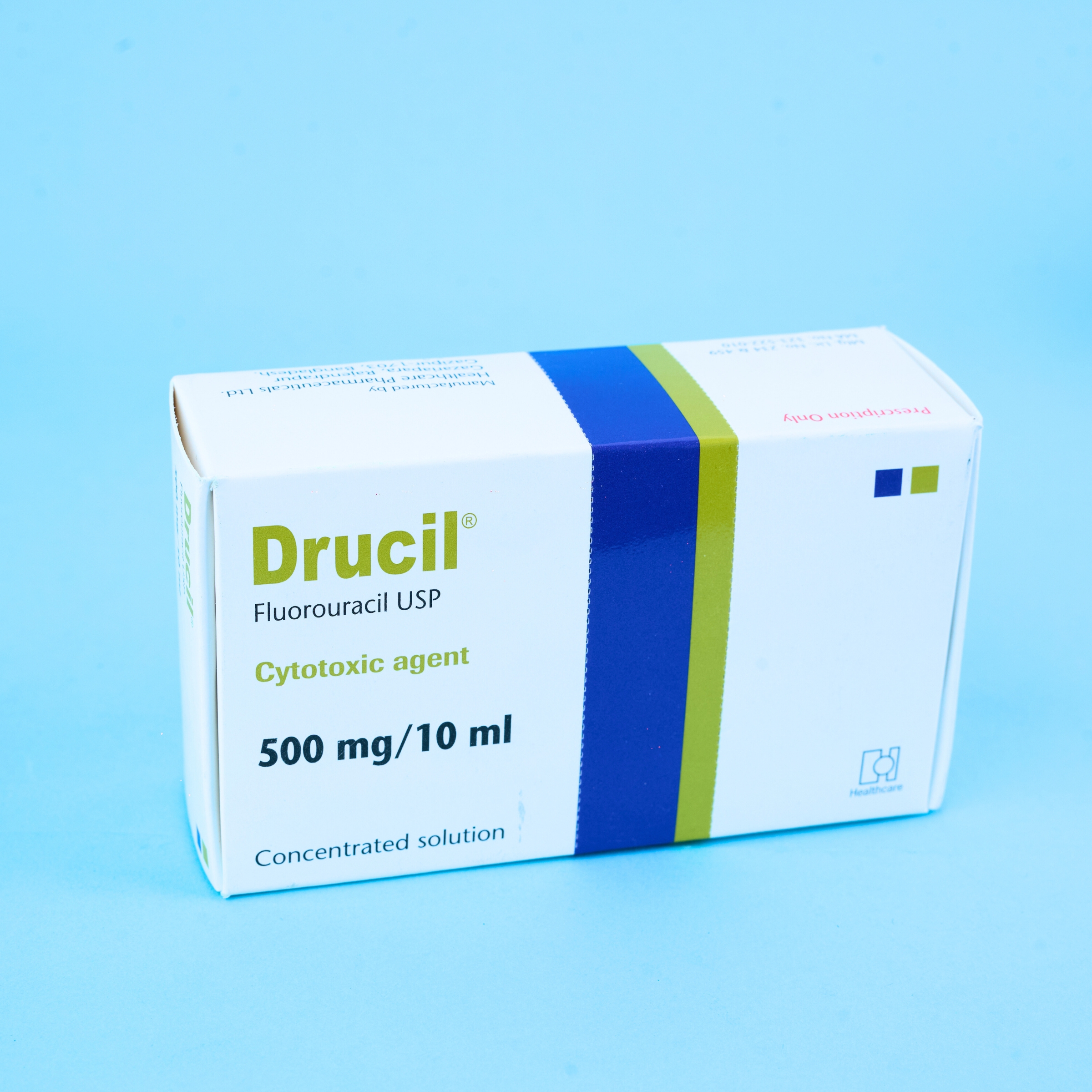
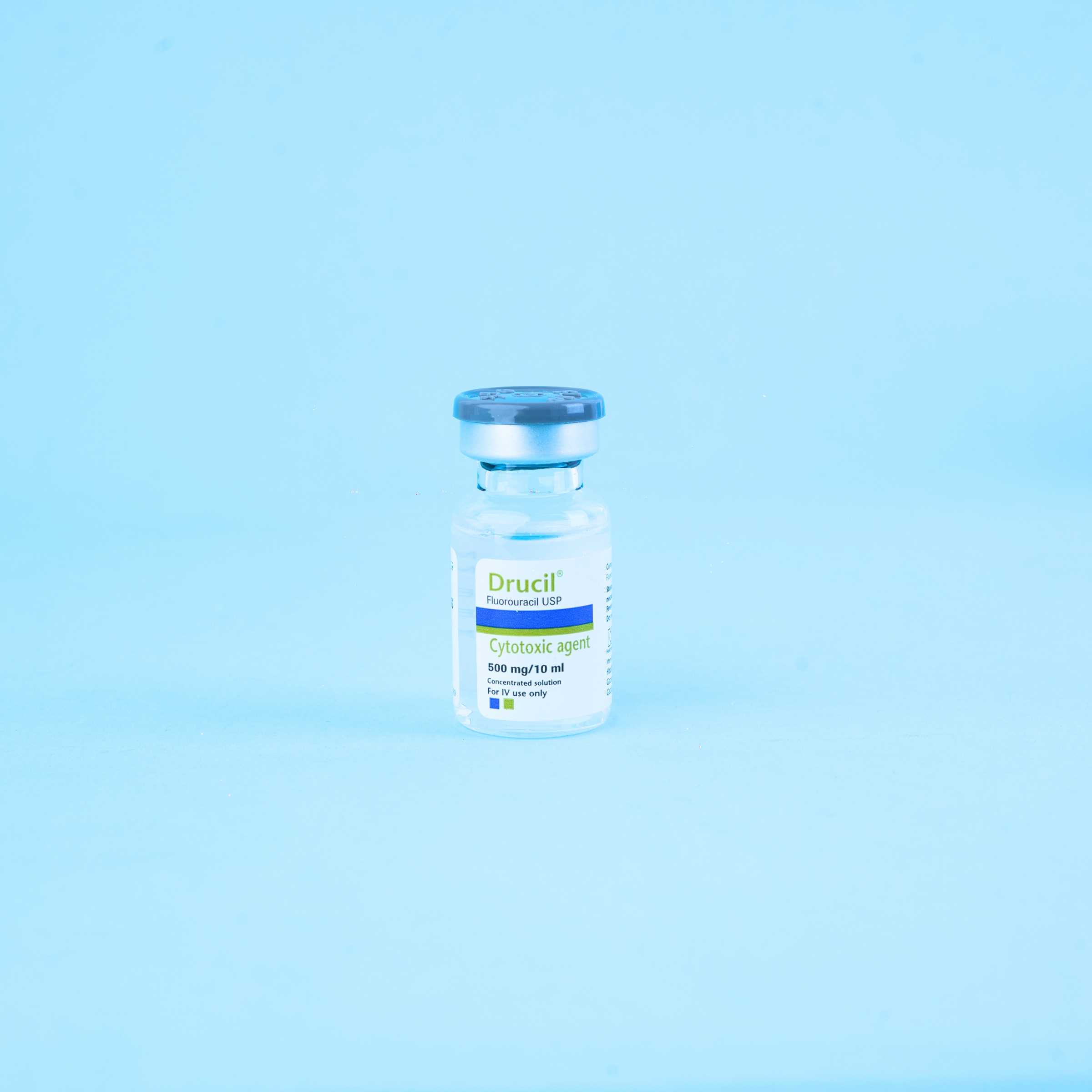
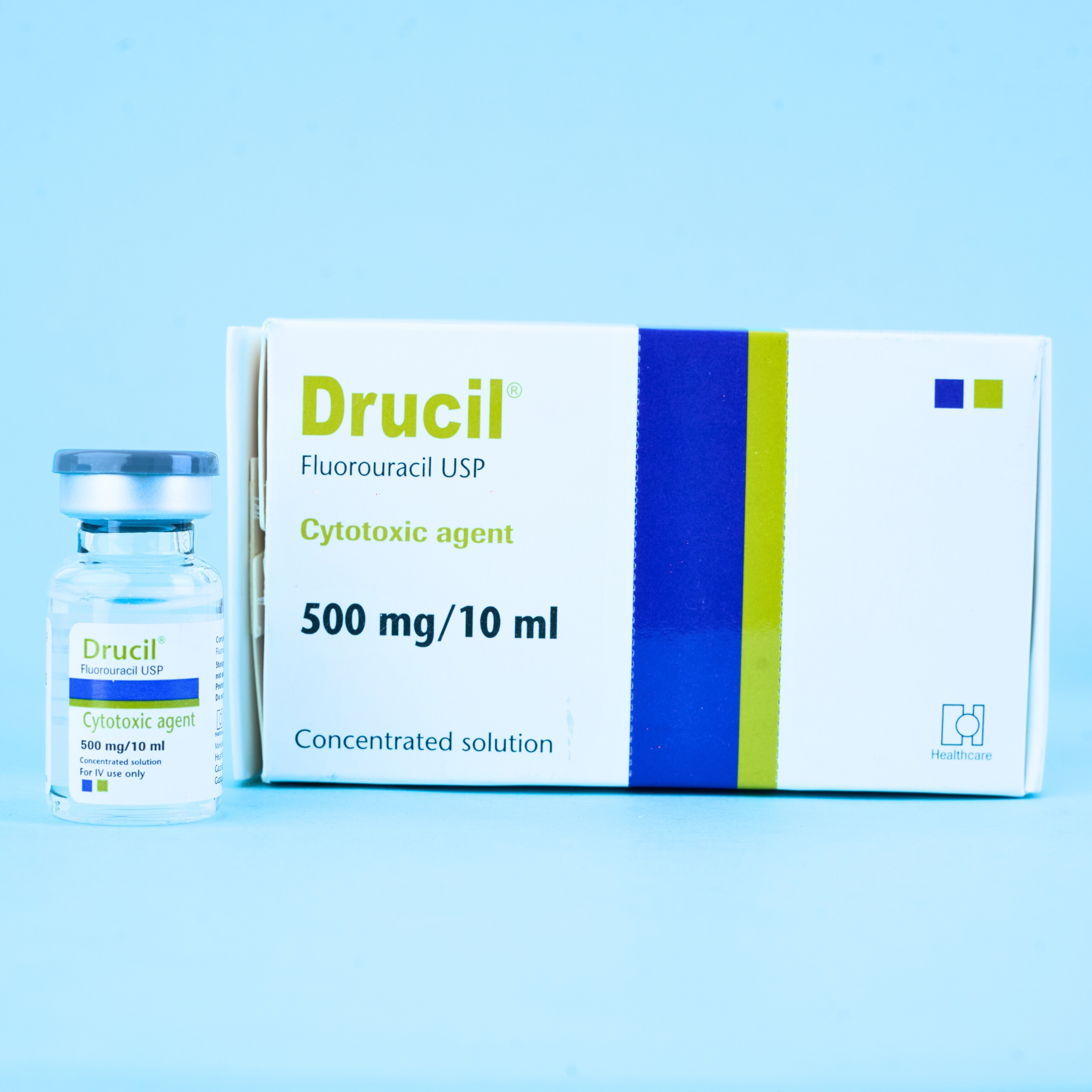
Fluorouracil is indicated alone or in combination for-
l Carcinoma of the colon or rectum
l Carcinoma of the stomach and exocrine pancreas
l Carcinoma of the liver
l Carcinoma of the breast
l Carcinoma of the bladder
l Carcinoma of the lung
l Epithelial ovarian carcinoma
l Cervical carcinoma
Pre-treatment with cimetidine for 4 weeks led to increased plasma
concentrations of Drucil following intravenous and oral administration in 6
patients. The effect was probably due to a combination of hepatic enzyme
inhibition and reduced hepatic blood flow.
Intravenous 5-fluorouracil can be delivered by rapid
intravenous bolus injection or slow infusion. The vial contents can rapidly be
injected directly into a peripheral vein, the commonest schedules being:
12-13.5 mg/Kg (500 mg/m2) daily for 5 days repeated at 4-weekly intervals. Slow
intravenous infusion requires the drug, to be diluted in 500 ml of dextrose 5%
solution, then infused over 2-3 hr on 5 successive days.
For palliative management of cancer: Initial Dose: 12 mg/kg
intravenously once daily for 4 successive days. Maximum Dose: 800 mg/day. If no
toxicity is observed, 6 mg/kg may be administered on the 6th, 8th, 10th, and
12th day (No therapy is given on days 5, 7, 9, or 11). Discontinue at the end
of day 12, even with no apparent toxicity.
Poor risk patients and those who are not in an adequate
nutritional state: Initial Dose: 6 mg/kg/day for 3 days. Maximum Dose: 400
mg/day. If no toxicity is observed, 3 mg/kg may be administered on days 5, 7,
and 9 (No therapy is to be administered on days 4, 6, or 8). Discontinue at the
end of day 9, even with no apparent toxicity.
Maintenance therapy: In instances where toxicity has not
been a problem, it is recommended that therapy be continued using either of the
following schedules:
Repeat the dosage of the first course every 30 days after
the last day of the previous course, or
When the toxic signs resulting from the initial course of
therapy have subsided, administer a maintenance dose of 10 to 15 mg/kg/week as
a single dose. Maximum Dose: 1g/week .The reaction by the patient to the
previous course of therapy should be taken into account and the dosage should
be adjusted accordingly.
Usual adult dose for cervical cancer: In combination with
cisplatin 1 gm/m2 IV on day 1. The cycle is repeated every 21 days.
Usual pediatric dose for malignant disease: The manufacturer
has reported that the safety and effectiveness of fluorouracil have not been
established in children. However, the drug has been used in children following
adult guidelines.
Intra-arterial infusion: Fluorouracil has also been given by
intra-arterial infusion for adult in doses of 5 to 7.5 mg/kg body weight is
dissolved in 20-100 ml of 5% Dextrose solution and administered 10-20 days by
using an infusion pump.
Combination with radiation: Usual adult daily dose of 5-10
mg/kg body weight is given in combination with radiation according to systemic
administration method or intra-arterial infusion method.
Combination with other anticancer drugs: Fluorouracil is
used alone or in combination in the adjuvant treatment of breast and
gastro-intestinal cancer, and palliation of inoperable malignant neoplasms,
especially those of the gastro-intestinal tract, breast, head and neck, liver,
genito-urinary system, and pancreas. It is also used with cyclophosphamide and
methotrexate in the combination chemotherapy of breast cancer. A usual adult
dose of 5 to 10 mg/kg body weight daily is given in combination with other anticancer
drugs every day or intermittently once to twice a week by systemic
administration method or intra-arterial infusion method.
It is contraindicated in patients that are severely
debilitated or in patients with bone marrow suppression due to either
radiotherapy or chemotherapy. It is likewise contraindicated in pregnant or
breastfeeding women. It should also be avoided in patients that do not have
malignant illnesses.
Potentially life-threatening effects: Severe effects from
5-Drucil are related to the dosage and duration of therapy.
Cardiac effects: Occasional case reports associating
5-Drucil therapy with 'ischemic cardiac events' evidence against the autoimmune
phenomenon is the fact that in several cases cardiotoxicity occurred within
several hours of the first dose.
Hematological effects: Potentially lethal effects caused by
severe hematological toxicity may develop within the first 10 days of treatment
being instituted but generally resolves within 3 weeks. At the recommended dose
and schedule it is rather uncommon for hematological toxicity to be severe. Any
ontribute to severe effects from 5-Drucil on the blood-forming cells. Thus
extensive prior irradiation or the concomitant use of cytotoxic drugs tend to
exacerbate the severity of the hematological side effects of 5-Drucil.
Neurological effects: Effects on the central nervous system
have been occasionally reported and cerebral ataxia is dose-dependent with an
incidence of between 3.1 and 7%. Acute cerebellar syndromes and myelopathy have
been described following intrathecal 5-Drucil. Neurological syndromes may occur
rarely after carotid artery perfusion in head and neck cancer. Other effects
Allergic reaction (including difficulty in breathing, closing of the throat,
swelling of the lips, tongue, or face, or hives), decreased bone marrow
function and blood problems (extreme fatigue, easy bruising or bleeding, black,
bloody or tarry stools, or fever, chills, or signs of infection), hand-foot
syndrome (tingling, pain, redness, swelling or tenderness of the hands and
feet), severe vomiting, diarrhoea, frequent bowel movements or watery stools,
or sores in the mouth or throat, or stomach pain or heartburn or black, bloody
or tarry stools. Other less serious side effects may include mild to moderate
nausea, vomiting or loss of appetite, balance problems, confusion, rash and
itching, or temporary hair loss. Conjunctivitis, both acute and chronic can
proceed to tear duct stenosis and ectropion following prolonged administration.
Very chronic administration, extending beyond 3 months, of low dosage has been
associated with low systemic toxicity but includes the possibility of painful
and tender hands and feet associated with erythema of the extremities.
Fluorouracil is contraindicated throughout pregnancy. The
literature pertaining to pregnancy and cytotoxic drugs is necessarily limited
but it appears in general that risk of teratogenesis diminishes with the
advancement of pregnancy. Therefore most cytotoxic drugs are absolutely
contraindicated in the first trimester and 5-fluorouracil, used in the first
trimester has been reported to cause multiple congenital abnormalities. There
are many case reports, however, of pregnancy being conducted successfully with
combination chemotherapy being given to the mother during the second and third
trimesters. Because of the age of the population and the natural history of the
tumors treated, most of the data on long-term follow-up pertain to therapy for
leukemias. More data need to be accrued on the subsequent development of
neonates before it is certain that any of these compounds are free of late
effects.
It is not known whether fluorouracil is excreted in human
milk. Because fluorouracil inhibits DNA, RNA and protein synthesis, mothers
should not nurse while receiving this drug.
5-Drucil is highly toxic drug with a narrow margin of
safety. Therefore patients should be carefully supervised, since therapeutic
response is unlikely to occur without some evidence of toxicity. Daily dose
should not exceed 1 gram. Treatment should be discontinued promptly when one of
the following signs of toxicity appears: Leucopenia (WBC under 3500/mm3).
Thrombocytopenia (platelet under 100000/mm3). Stomatitis ( the first small
ulceration at the inner margin of the lips is a signal for stopping treatment).
Severe diarrhoea (frequent bowel movements and watery stools).
Gastro-intestinal ulceration and bleeding.
Use in Special Populations
Neonates: No dosage recommendations are made for neonates.
Children: Safety and effectiveness in children have not been
established.
The elderly: No special precautions are required, doses
being adjusted for the patient's weight and height.
Cases of deliberate overdose are unknown but excessive
toxicity because of the hematological effects as described above. There is no
specific antidote to 5-Drucil toxicity; treatment consists in supportive care.
In addition to the hematological toxicity other toxicities will occur with
overdose. Sign and symptoms are qualitatively similar to the side effects.
Treatment should be performed promptly and appropriate drugs are given to
control symptoms of overdose.
Store the vial in original carton not exceeding 25℃.
Do not refrigerate. Protect from light.